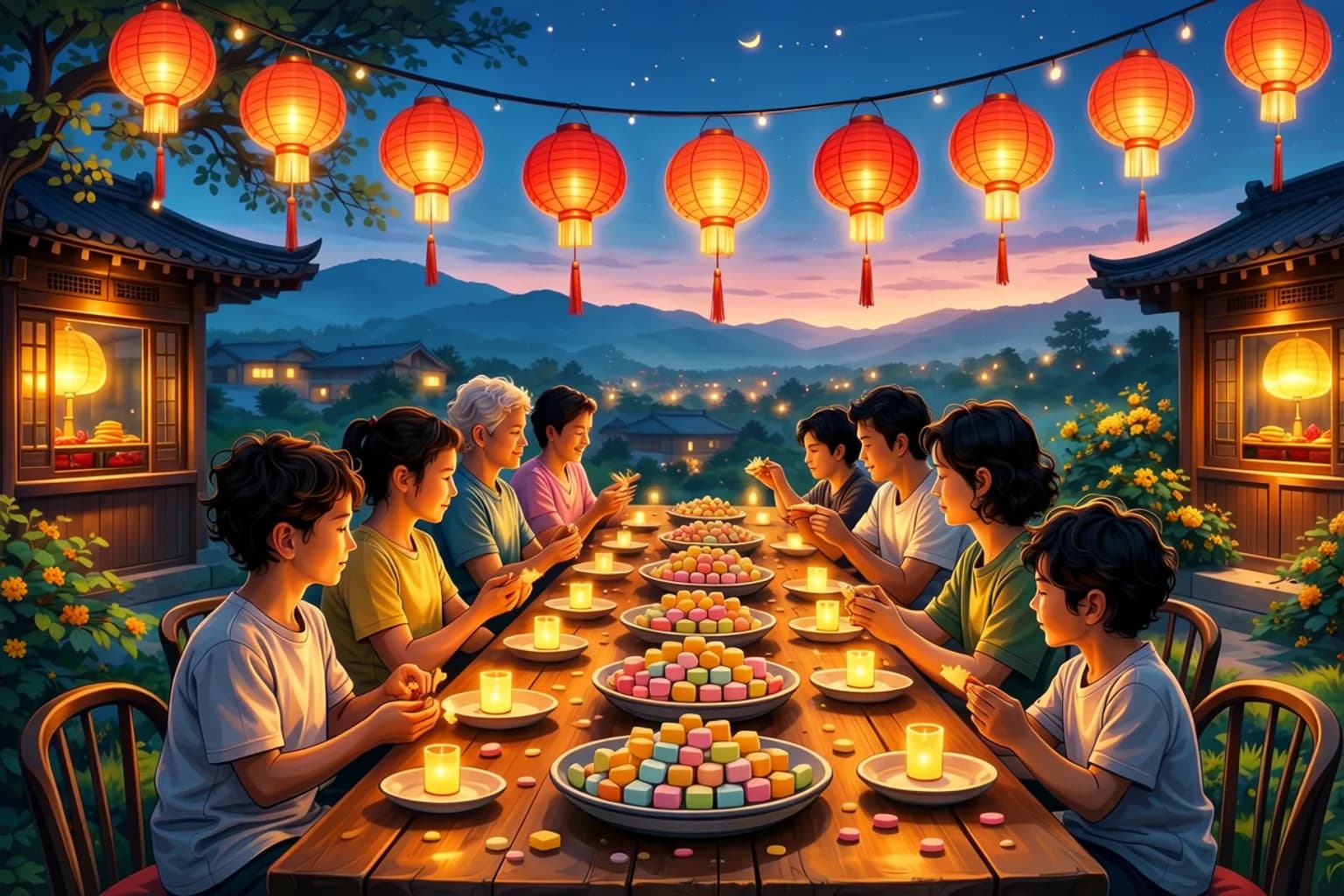
This is a distinction worth handling with care, because both words mean different things to different people. But there is a real and useful idea here: that the rich heritage of a people, their food, music, festivals, art, language, and shared stories, is something that connects and includes, while rigid religious dogma, when it hardens into a tool of division, separates and excludes. To lean into the first while loosening the grip of the second is, for many, a path toward both rootedness and openness.
This is not an argument against faith itself, which can be deep and beautiful, but against the way belief sometimes calcifies into a wall between people who might otherwise share a table.
Our street runs a food festival every autumn. My neighbour brings biryani, we bring my mother's pierogi recipe, and the family across the road brings a jollof rice that causes a queue. Have you ever watched people argue about doctrine over a shared table? Neither have I. The table does something the debate never manages.
Culture as Connection
Culture, at its best, is a celebration. The festival that brings a community together, the food passed down through generations, the music that carries a people's joys and sorrows, the stories that give a shared identity, all of these are inclusive by nature. You can join someone's festival, enjoy their food, appreciate their art, without having to believe anything in particular. Culture invites participation; it gathers people in.
Heritage tends to open a door and say "come, share this with us." Dogma too often draws a line and asks "are you one of us or not?"
This is why cultural celebration is such a unifying force. It offers the warmth of belonging and rootedness without demanding doctrinal agreement, which means it can be shared across the very lines that often divide.
When Religion Divides
Faith becomes a problem not in its genuine spiritual depth, but when it hardens into dogma that defines people primarily by who is in and who is out. In this mode, belief becomes a boundary marker, a way of separating the saved from the lost, the believers from the infidels, us from them. It is this dividing function, not faith itself, that has fueled so much of history's conflict.
The spiritual core of most traditions, the call to love, to humility, to compassion, to seek the divine, actually unites rather than divides. It is when this core is buried under tribal dogma, when belief becomes about belonging to the right group rather than living rightly, that religion turns into a wall.
Keeping the Depth, Releasing the Division
The aim is not to abandon faith or strip away spiritual depth. It is to hold what unites and release what divides:
- Celebrate the heritage that gathers people in: the festivals, the food, the music, the shared stories.
- Honour the spiritual core that unites traditions: the universal call to love, humility, and compassion.
- Loosen the dogma that divides: the tribal boundary-drawing that turns belief into a wall between us and them.
- Hold your own convictions with humility: deeply, but without contempt for those who believe differently.
A Wider Belonging
The person who celebrates their culture while holding their religion humbly gets the best of both. They have roots: the warmth of belonging to a heritage, the richness of tradition, the identity that comes from a people and a story. And they have openness: the ability to share across lines, to appreciate other cultures, to meet people of different beliefs as fellow human beings rather than as outsiders.
This is a way of being grounded without being walled in, rooted without being closed off. Celebrate your culture, fully and joyfully. Hold your faith, if you have it, with depth and humility. And let neither become a reason to build a wall against the rest of the human family, with whom, beneath all the differences of dogma, you share far more than divides you.
The rest is for seekers
Keep reading free. Log in and every article on Reality Awake opens for you.