For most of human history, in many cultures, people deliberately kept death in view. The Latin phrase memento mori, "remember that you must die," was not a morbid curiosity but a respected practice. Skulls sat on the desks of scholars. Reminders of mortality were woven into art, architecture, and daily ritual. These were not gloomy people obsessed with dying. They had discovered something we have forgotten: that remembering death is among the surest ways to live well.
Our own culture does the opposite. We hide death, deny it, and push it as far from awareness as possible. And we are, by many measures, no happier for it. Perhaps the old practice was wiser than we assume.
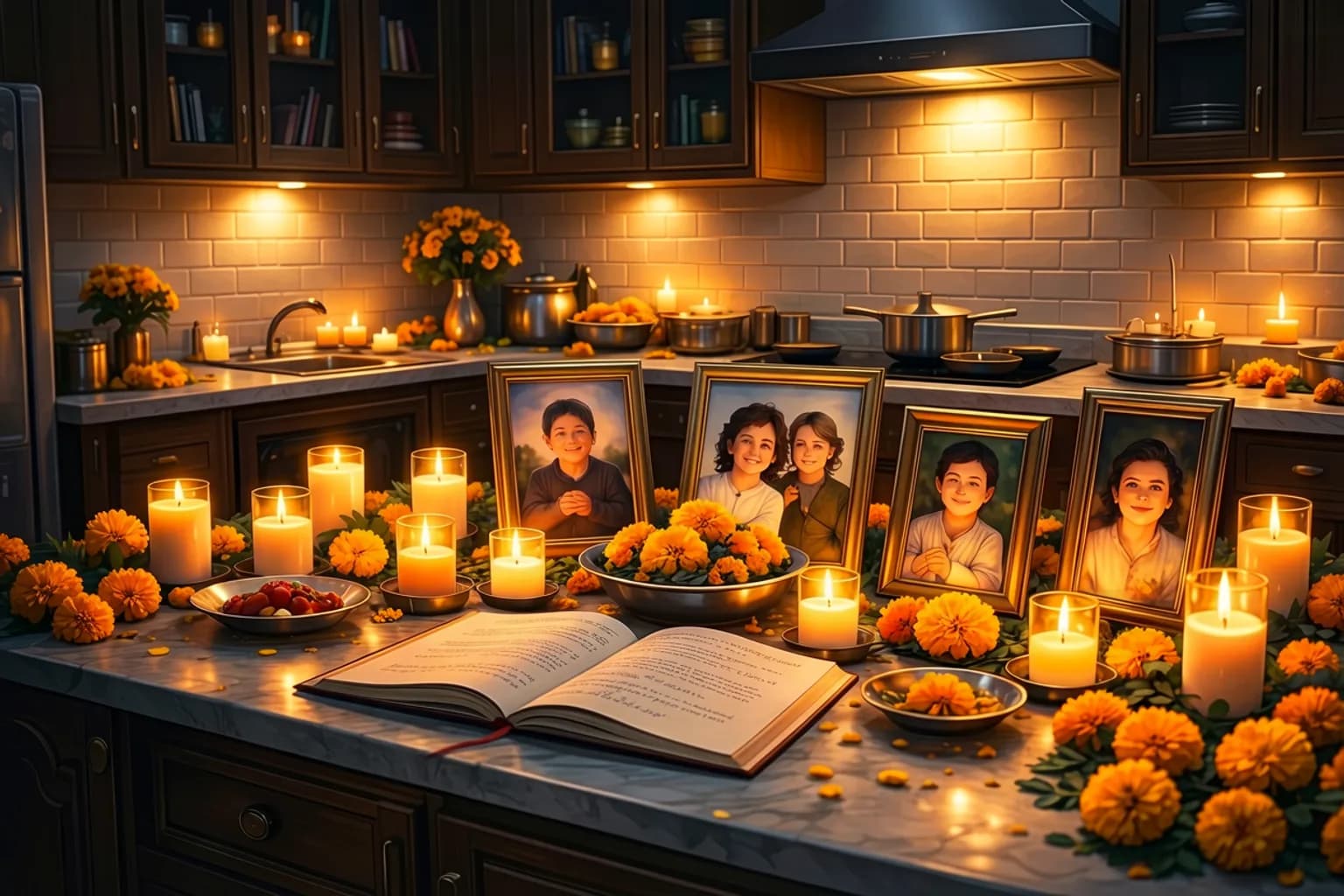
I grew up with Dia de los Muertos: marigolds on the table, my great-grandparents' photographs, their favourite dishes cooked and set out among candles. Death visited our kitchen once a year as a guest, not an intruder. It never made the children of our house morbid. It made the living taste like something.
Why Remembering Death Helps
It seems backward that contemplating death would improve life rather than darken it. But the logic is sound. The awareness of mortality does several things at once, all of them clarifying.
It is forgetting death, not remembering it, that lets us waste our lives. The reminder is what wakes us up.
Remembering death cuts through triviality, revealing what actually matters. It defeats procrastination, since the assumption of endless time is what fuels delay. It deepens gratitude, because what is finite is precious. And it returns us to the present, the only place we ever actually live. The practice does not make life smaller; it makes it vivid.
Not Morbidity, But Clarity
It is important to distinguish memento mori from morbid obsession. The practice is not about dwelling fearfully on death, ruminating on illness, or sinking into gloom. It is a brief, periodic remembrance, a glance at the fact of mortality that recalibrates how you spend your day, and then recedes.
Held this way, it produces not fear but a kind of joyful urgency. The people who genuinely practise it tend to be more present, more grateful, and more deliberate than those who keep death entirely out of mind. They are not gloomy; they are awake.
How to Practise It
You do not need a skull on your desk. The practice can be woven gently into modern life:
- A morning remembrance. Begin the day with a brief acknowledgment that your days are finite, and let it shape your priorities.
- The clarifying question. When caught in something trivial, recall mortality and ask whether this deserves your limited time.
- Gratitude through impermanence. Periodically remember that the people and things you love will not last, and let that deepen your appreciation now.
- Periodic reflection. Now and then, take a longer pause to consider your life from the perspective of its end, and adjust accordingly.
The Gift of the Reminder
The great irony of memento mori is that remembering death is what allows us to truly live. The person who never thinks about mortality drifts through their days half-asleep, postponing what matters and squandering their time on what does not, lulled by the illusion that there will always be more. The person who keeps death gently in view is awakened by it, returned again and again to the preciousness and urgency of being alive.
This is why the practice endured across so many cultures and centuries. It is not a dark obsession but a tool for wakefulness, a way of ensuring that the knowledge we all possess but mostly suppress, that our time is limited, actually changes how we live. Remember that you must die. Strangely, reliably, it is one of the surest paths to a life fully lived.