Social media arrived promising connection, and in some ways it delivered. But alongside the connection came something subtler and more corrosive: a slow erosion of the self. When a large part of your life is spent performing for an audience, curating an image, and measuring your worth in reactions, something fundamental shifts. You begin, gradually and without noticing, to live for the audience rather than for yourself, and the authentic self quietly recedes behind the performed one.
This is not a moral panic about a new technology. It is an observation about what happens to a person who spends years performing their life instead of living it.
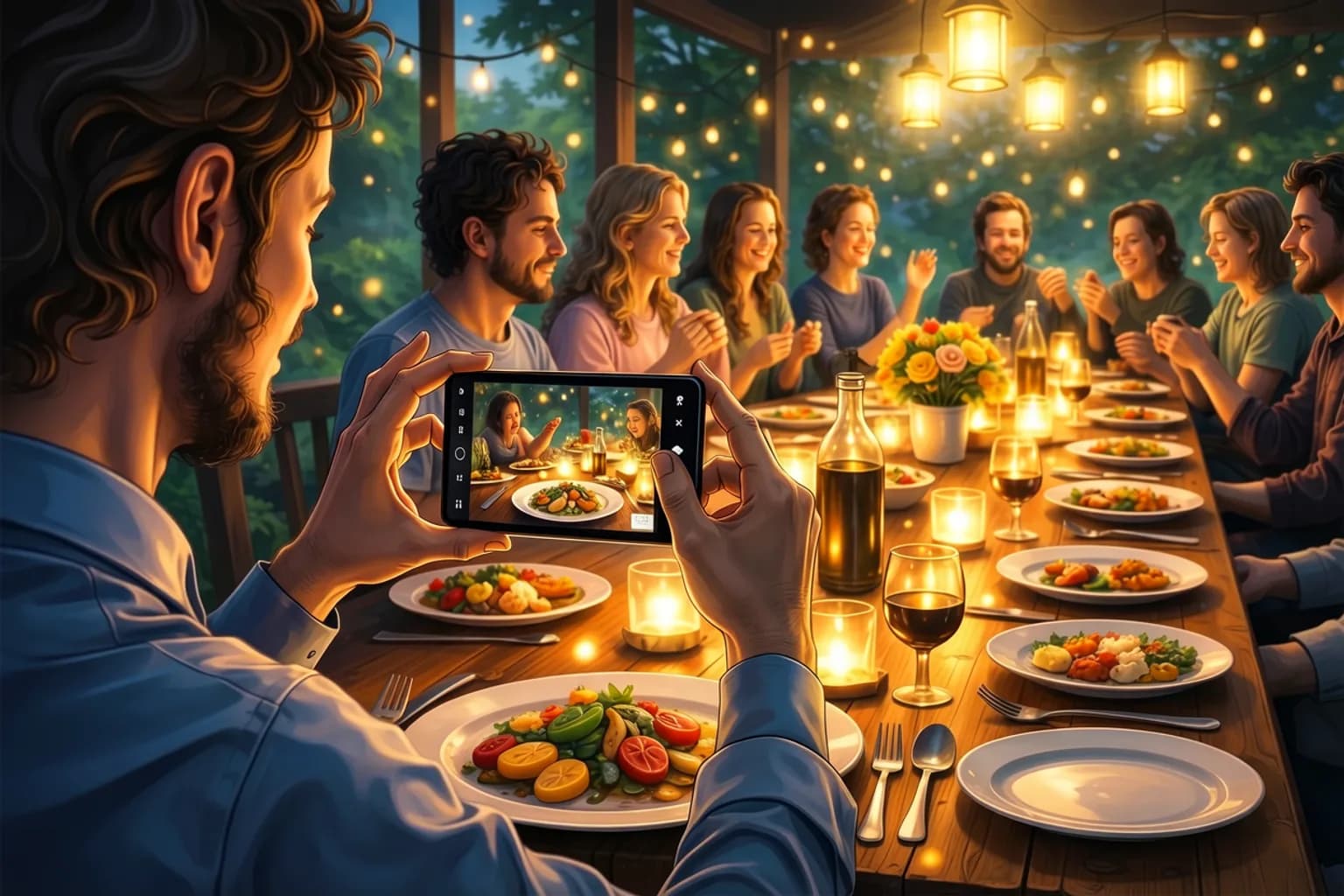
On the day of my niece's baptism, I caught myself arranging the dessert table for a photograph before anyone had tasted a thing. My sister laughed, but it stung. My abuela's parties live in my memory like weather, vivid and unrecorded; not one photograph of her tamales exists, and I can still taste them. Now I photograph nothing until everyone has eaten. The order matters.
The Performance Replaces the Experience
Notice what social media does to an experience. You are at a beautiful place, a meal, a moment with people you love, and part of your attention is already elsewhere: framing the photo, composing the caption, anticipating the reactions. The experience itself becomes raw material for the performance. You are no longer fully living the moment; you are documenting it for an audience, and the documenting displaces the living.
When every moment becomes content, you stop having experiences and start producing performances of them.
Over years, this changes your relationship to your own life. The experience stops being the point; the performance does. You begin to live at one remove from your own existence, always watching yourself from the outside, through the imagined eyes of an audience.
The Worth Measured in Reactions
The deeper damage is to the sense of self-worth. When your posts are met with likes and approval, you feel a small lift. When they are ignored, you feel a small wound. Slowly, your sense of your own value becomes entangled with these reactions, with the metrics of approval from people who barely know you. You start, without deciding to, to shape yourself into whatever earns the most approval.
This is the loss of self in its clearest form: becoming whoever the audience rewards rather than remaining who you actually are. The authentic self, with its unphotogenic complexity and its private depths, gets edited out in favour of a curated version optimised for reactions.
The Comparison Trap
There is a further cost. Social media presents you with an endless stream of everyone else's curated highlights, their best moments, their performances, against which you measure your own ordinary, unedited life. The comparison is rigged and relentless, and it breeds a chronic, low-grade dissatisfaction, a sense that everyone else is living more fully than you, when in fact you are comparing your behind-the-scenes to their highlight reel.
Reclaiming the Self
The way back is not necessarily total abstinence, though some find that helpful. It is reclaiming the boundary between living and performing:
- Live some moments only for yourself. Deliberately leave experiences undocumented. Let them be yours alone.
- Notice when you are performing. Catch the moment you start framing your life for an audience, and choose to simply be in it instead.
- Detach worth from metrics. Your value was never in the reactions. Refuse to let a number measure your life.
- Limit the comparison. Recognise the highlight reel for what it is, and protect yourself from measuring your real life against everyone's edited one.
The self you are at risk of slowly losing is the one that exists when no one is watching, the authentic, unperformed person underneath the curated image. That self is worth protecting. Live enough of your life away from the audience that you do not forget who you are when no one is reacting. The performed life looks impressive from outside. The lived life, unwatched and real, is the only one that was ever actually yours.