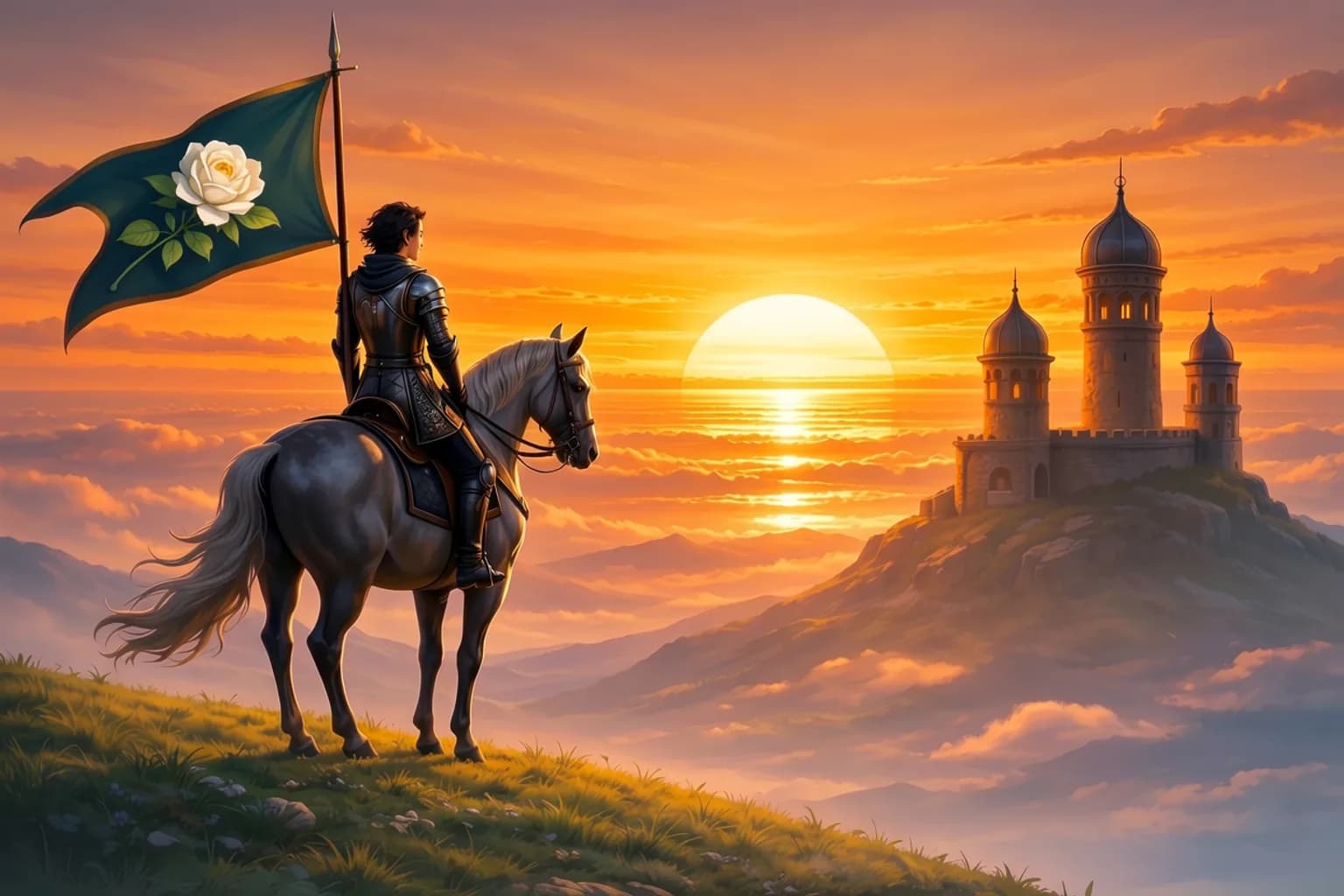
No card empties the colour from a querent's face faster, and no card is more consistently misread. Death, card thirteen, rides a white horse in black armor, carrying a banner with a white rose, and across the field before him a king lies fallen, a bishop pleads, a maiden swoons, and a child, alone of all of them, looks up unafraid and offers a flower. The sun on the horizon, look closely, is rising between two towers, not setting.
Let me say the headline first, as I do at every table where this card lands: in reflective tarot practice, Death almost never refers to physical death, and responsible readers do not use cards to predict such things. The card means ending, the real, structural, no-going-back kind, and the fear it triggers is the measure of how badly our culture handles that subject. My colleague Arjun wrote a whole essay on memento mori; this card is the deck's version, with a horse.
What Death Means
Upright, card thirteen gathers the terminal truths:
- An ending that is actually final: the chapter closed, not paused, the door that will not reopen
- Transformation by subtraction: what you become when something is fully over
- The great equaliser: the fallen king's crown in the dirt; endings respect no rank
- Clearing: the field mowed so the next planting is possible, my colleague Omar would point to Shiva here, and he would be right
The child with the flower is the card's secret centre: the one figure who greets the rider without armor, plea, or faint, and the only one Death seems to see.
Reversed: The Ending Refused
Reversed, Death is the funeral postponed: the finished thing kept on life support, the job, the identity, the relationship maintained in its coffin out of fear of the empty field. Resistance to an ending, the card teaches, does not prevent it; it only prevents what was supposed to come after. When Death lands reversed in my journal, the question is the same one my 999 colleague asks in his numbers column: what is over that I have not yet let end?
Death's banner carries a white rose, not a scythe's blade: the card rides in not to take the harvest, but to clear the field that the harvest exhausted.
Where This Really Comes From
The honest history, faithfully. Card thirteen entered the deck in the plague centuries, when the Dance of Death, skeletons leading popes and peasants alike in one procession, decorated half the walls of Europe; the trionfi simply dealt the era's most familiar fresco into the game. Many old decks declined to print the card's name, leaving thirteen untitled, the unnameable trump. The number itself gathered its dread along the way. The Smith deck of 1909 added the rising sun and the child, quietly converting the medieval procession into the modern teaching: the ending, met without armor, has a dawn behind it.
Common Questions
Does the Death card mean someone will die? No, and a reader who tells you so is practising cruelty, not tarot. The card speaks of endings in the life of the living.
Is Death ever a good card? Ask anyone who finally left what was finished. The card is as good as the ending is necessary.
Death versus the Tower? The Tower is sudden demolition, the structure failing in an afternoon. Death is organic conclusion, the season ending on schedule. One is a lightning strike, the other a harvest.
A Reflection, Not a Prediction
When Death rides into a reading, inventory your endings with the child's eyes rather than the king's. Name the thing in your life that is, in honest fact, already over, and grant it the dignity of a real conclusion: the goodbye said, the papers signed, the field cleared. The card's promise is in its own picture, and I have verified it across twenty years of tables: the sun behind the rider is rising. But only the field that gets cleared ever sees it.