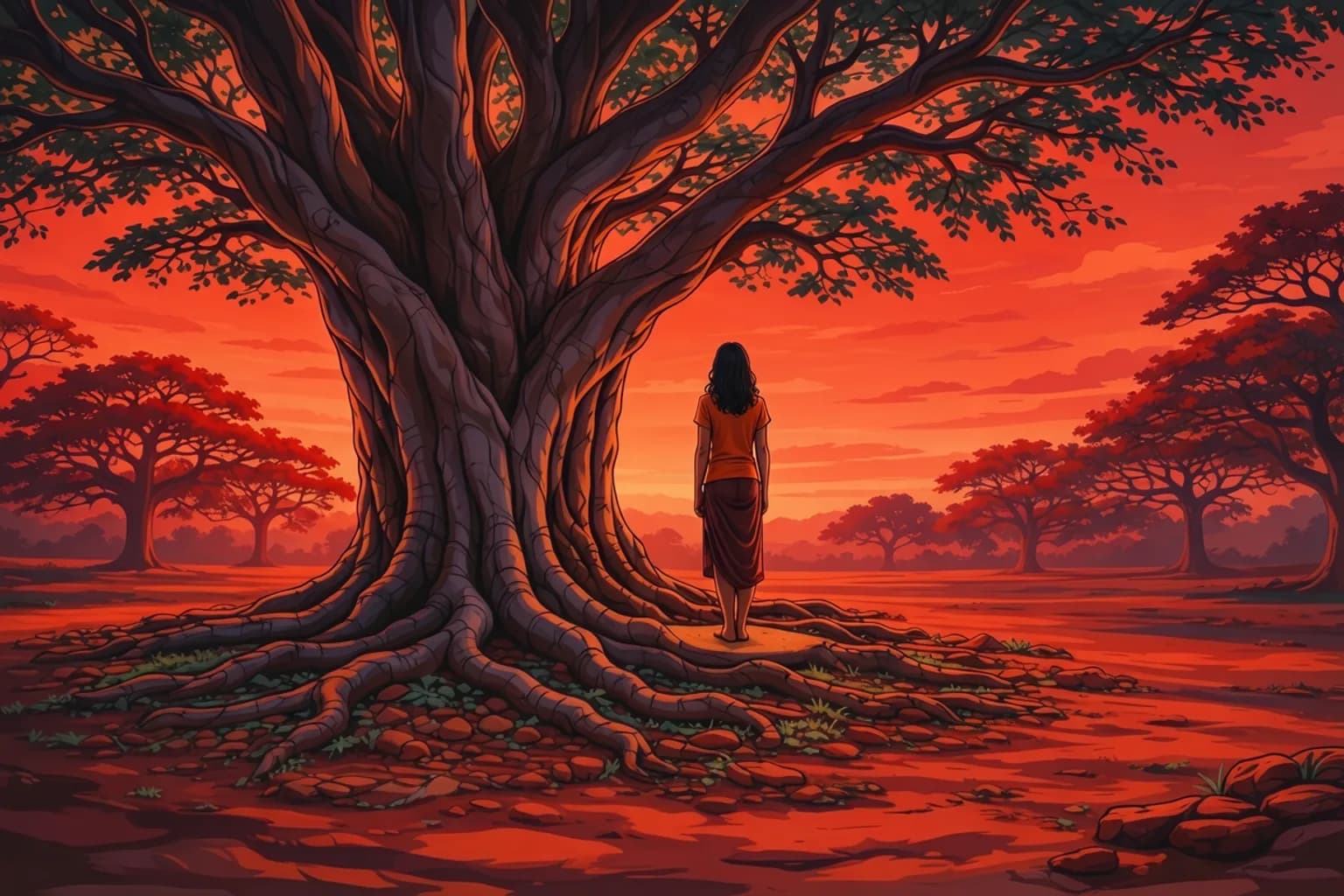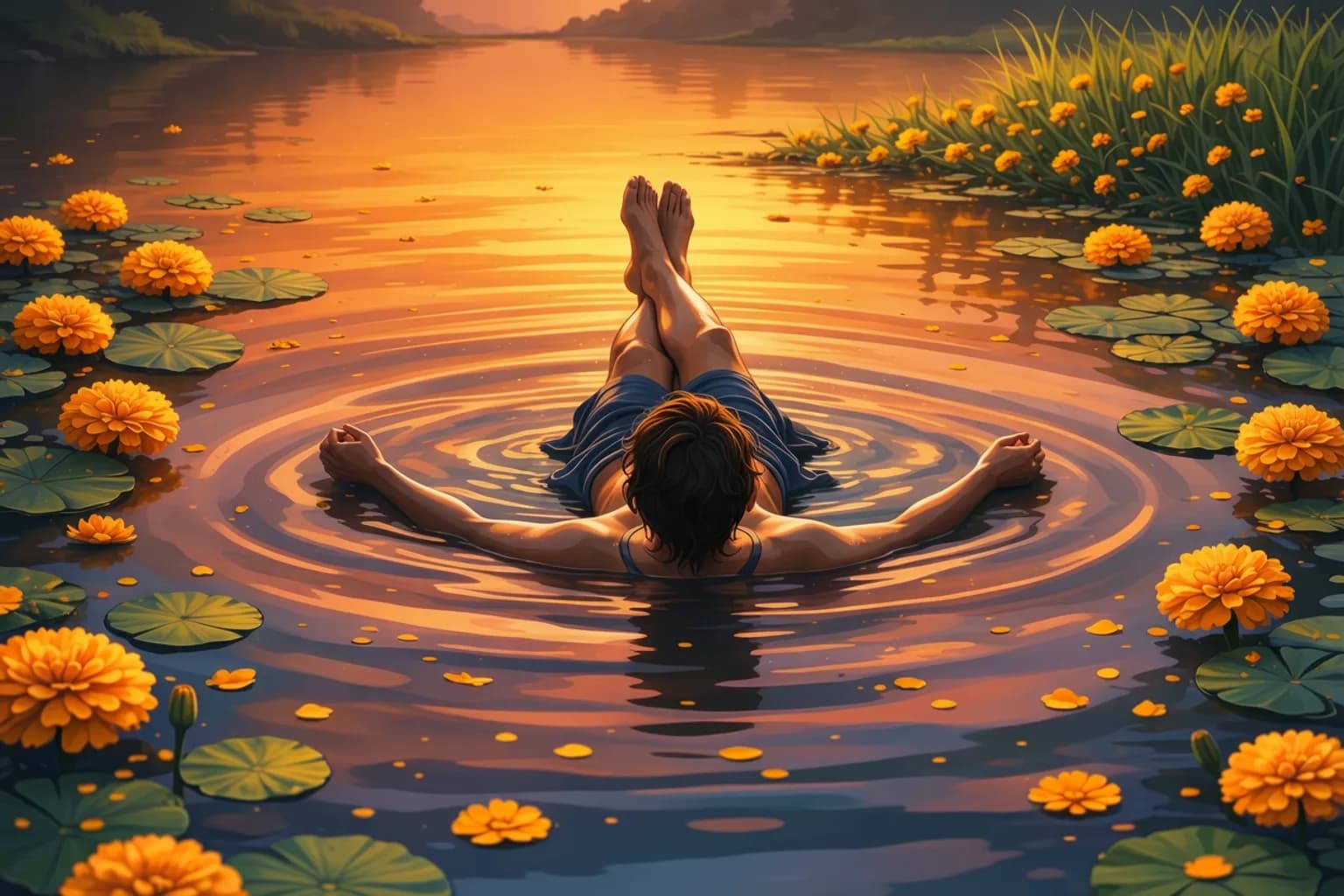
If the root chakra asks whether you are safe, the second chakra asks a question many devout and disciplined people never permit themselves: are you alive to the sweetness of being here? Svadhisthana, seated in the lower belly, orange in the familiar rainbow, governs in the yogic map the waters of a life: feeling, pleasure, sensuality, and the flow from which creativity rises.
I grew up in a devout home in Varanasi where discipline was the family language, and it took me years to understand that my Dadi, the most devout of us all, was also the most alive to pleasure: the first mango of the season, the evening raag on the radio, the laughter at her own jokes. She would not have known the word Svadhisthana. She embodied it better than the books do.
What the Sacral Governs
In the classical picture, Svadhisthana is a six petalled lotus associated with the element of water, and its domain is everything in us that flows:
- Feeling itself: the capacity to actually experience emotion rather than file it
- Pleasure and sensuality, received without guilt
- Creativity: the play from which all making begins
- Adaptability, the water-nature that moves around stones rather than fighting them
Signs the Sacral Needs Tending
The tradition describes the second centre blocked or flooded; an honest look at modern life finds both everywhere. Blocked: the person who cannot remember their last real pleasure that was not a screen, who treats every meal as fuel, who has filed feelings unopened for years, whose creativity died in school the day it was graded. Flooded: pleasure turned compulsive, feeling turned to storm, the search for sweetness that cannot stop.
The middle path is an old one in every tradition I have studied: the river flowing in its banks, neither dammed nor in flood.
A spiritual life that cannot enjoy a mango is missing a centre. Delight, received with gratitude, is also a form of prayer.
Practices That Restore the Flow
Simple, humble, effective. Eat one meal a week slowly, as an event rather than a refuelling. Return to water literally: the river walk, the long bath, the swim. Make something badly and gladly, a drawing, a dish, a song in the kitchen, with no audience and no grade. Let one feeling a day be felt all the way through instead of managed. And honour the body's joys as gifts rather than threats; my tradition at its best has always known that the senses, rightly held, are doorways and not enemies.
Where This Really Comes From
The honest history I give in every chakra piece. The chakra systems come from the tantric traditions of medieval India, and the texts disagree charmingly among themselves: different lineages counted different centres in different places. The tidy modern package, seven chakras, rainbow colours, one psychological theme each, was assembled much later, largely through early twentieth century Theosophist translations and later Western authors who added the colour coding within living memory.
I tell you this not to weaken the practice but to free it. The map is human, revised, and still useful, because the territory is real: there is, in every life, a domain of feeling, pleasure, and flow, and lives wither when it is neglected. My Dadi never saw the diagram. She kept the river flowing anyway.