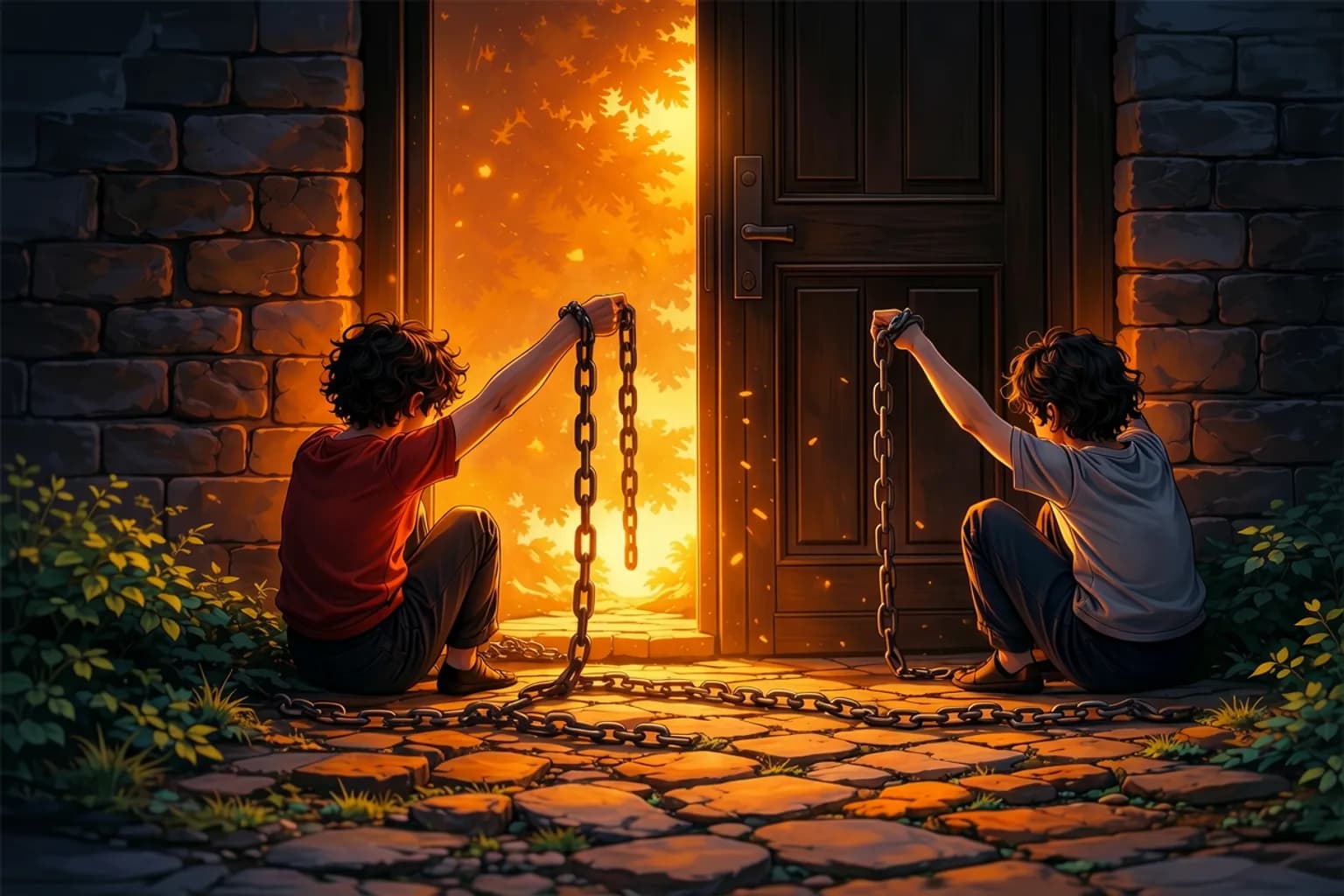
Card fifteen is designed to be looked at twice. First glance: a horned beast squats on a black pedestal, bat-winged, torch lowered, with two human figures chained at its feet, the deck's most alarming tableau. Second glance, the one the card exists for: the chains around the figures' necks are loose. Wide. They could be lifted off with two hands and a decision. Nobody in the picture is trying.
That second glance is the entire card. The Devil, in reflective practice, is not about evil arriving from outside. It is about bondage maintained from inside: the habits, dependencies, and bargains we curse daily and renew nightly.
What the Devil Means
Upright, the card gathers the binding faculties:
- Addiction in every register: substances, screens, spending, the argument loop, whatever owns the hands at midnight
- The golden cage: security, status, or comfort kept at the price of the self, the job, the role, the image
- Materialism as worldview: the pedestal's inscription, in effect, that nothing exists but appetite
- Shadow bargains: the deals made with one's own worst patterns because they pay reliably
The beast's torch points downward, burning energy into the ground; the figures have grown small horns of their own, the card's quiet note about how long they have lived there. And still: the chains hang loose.
Reversed: The First Hand on the Chain
Reversed, the Devil is, unusually, often the better omen: the moment of seeing the looseness, the bargain questioned, the first honest accounting of what the cage costs versus what it pays. It can also warn of the half-escape, the chain lifted and quietly resettled, my colleague Arjun's whole column on refusing the mind's bargains compressed into one image. Reversed, my journal question is mechanical: which chain have I tested lately, with both hands, all the way off?
The Devil's chains are engineered loose, and that is the card's mercy and its indictment in one detail: the cage was never locked. It was furnished.
Where This Really Comes From
The honest history, as ever. The medieval trionfi Devil was simply the era's Devil: the horned tormentor of cathedral walls and morality plays, dealt into the deck as the recognisable face of vice and bad ends. The transformative detail, the loose chains, arrives with the occult redesigns, above all the 1909 Smith deck, which borrowed the composition of its own Lovers card and inverted it: the same two figures, the angel replaced by the beast, Eden replaced by the pedestal. The deck thus contains a before and after that no one who sees it forgets: card six, the choice made in alignment; card fifteen, the choice calcified into chains. Same couple. Same posture. Different management.
Common Questions
Is the Devil card evil? The card depicts bondage, not malice, and in reflective use it is among the deck's most liberating: nothing changes faster than a cage finally seen as voluntary.
What does the Devil mean in love? Attachment versus love: the bond held by need, jealousy, comfort, or fear of the empty flat. The loose chains question applies to relationships with perfect precision, and answering it honestly is kinder than another anniversary in the cage.
The Devil versus Death? Death ends what is finished; the Devil prolongs what is finished but profitable to some appetite. One is a clean autumn, the other a lease renewed in the dark.
A Reflection, Not a Prediction
When the Devil appears, name your pedestal: the habit, bargain, or cage that costs you most and that you defend most fluently. Then perform the card's own experiment, literally if it helps: list what lifting the chain would actually require, in steps, and notice, as the figures in the card never do, that the list is shorter than the sentence you have been serving. The Devil's power, twenty years of tables have taught me, is exactly as great as the looseness left unexamined. Look twice. It is how the card was built to be beaten.