A miller and his son were taking their donkey to market to sell it, and because they wanted it to arrive looking well, they walked beside it rather than riding.
They passed a group of girls at a well, who laughed at them. Look at those two, one said, wearing out their feet beside a perfectly good donkey.
The miller thought about it and decided she had a point, so he put the boy on the donkey's back and they went on.
A little further along, three old men were arguing under a tree, and one of them broke off to say what he thought. There it is, he said. No respect. A young man riding while his father walks in the dust.
That also sounded right. So the boy got down and the miller got up, and they went on that way.
Then they passed a group of women with children, who were harder about it than anyone so far. A grown man riding, they said, and that poor child trotting to keep up.
So the miller pulled his son up behind him and they rode together, which seemed to solve it, until they came near the town and a man at the roadside asked whether the donkey belonged to them.
It does, said the miller.
You would not think so, said the man, from the way you are using it. Two of you on one small animal. It would be kinder to carry it than to ride it into the ground.
And that is what they did, because by that point they were no longer making decisions. They were simply doing whatever the last person said.
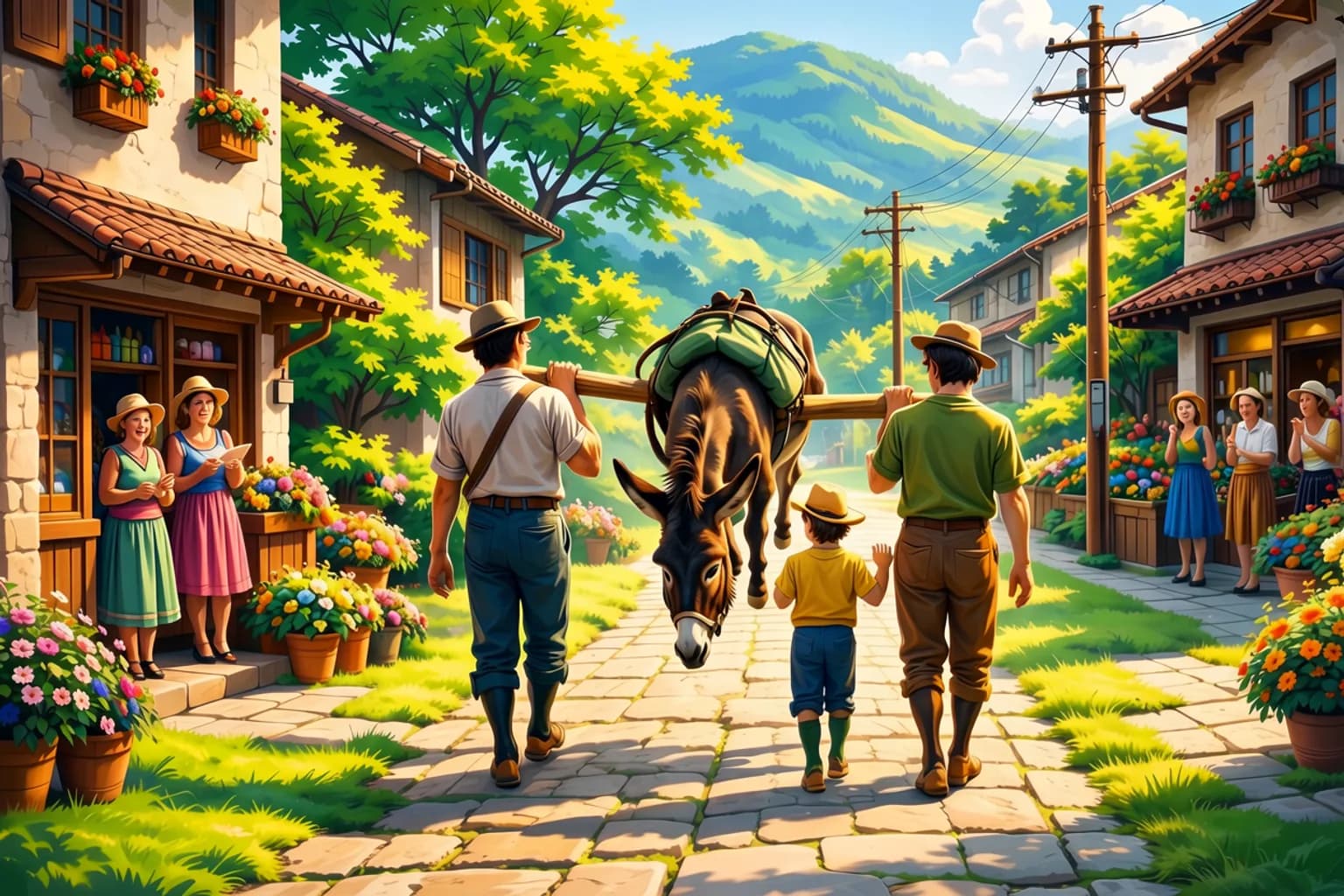
They cut a pole and tied the donkey's legs to it and lifted it up between them, and they carried it, upside down and braying, through the streets towards the market bridge, and people came out of doorways to watch, because it was the funniest thing anybody had seen that year.
The noise and the laughing frightened the animal. It fought the ropes on the bridge, kicked free, went over the side into the river and drowned, and the two of them stood there having lost the donkey they had set out to sell.
The Lesson of the Miller and the Donkey
Every single critic was right. That is the design of the story and the reason it is not about ignoring people. The girls were right that the walking was silly. The old man was right about the father in the dust. The last man was right about two on one animal. No individual note was wrong, and following all of them destroyed the thing.
Feedback has to be filtered by who is giving it and what they are responsible for. Not one person on that road was going to market and not one of them owned the donkey. They paid nothing for their opinions and they paid nothing for the outcome.
The absurd position is reached by small sensible steps. Nobody sets out to carry a donkey. You get there by adjusting four times, reasonably, and by never once asking what you actually came out here to do.
Where this actually comes from
It is filed under Aesop and it is not Aesop. The story does not appear in the ancient Greek fable collections at all.
The oldest versions we can find are medieval. It shows up in Arabic and Latin material from around the thirteenth century, including in the sermon collections that preachers used for examples, and it circulates widely in Europe from there. Caxton printed it in English in the fifteenth century inside a book of Aesop, which is roughly when it acquired its Greek passport, and it has kept it ever since.
The moral was tidied along the way. It usually ends now as please all and you will please none, which is fair but narrow, and it puts the fault on the miller for being weak.
Some of the older tellings are more interested in the road than in the man. The line they end on is closer to this: there is no way to travel that somebody will not have a comment about, so the comments cannot be what you steer by. That is a harder instruction than pleasing nobody, and it is closer to what actually happened on that bridge.
The rest is for seekers
Keep reading free. Log in and every article on Reality Awake opens for you.