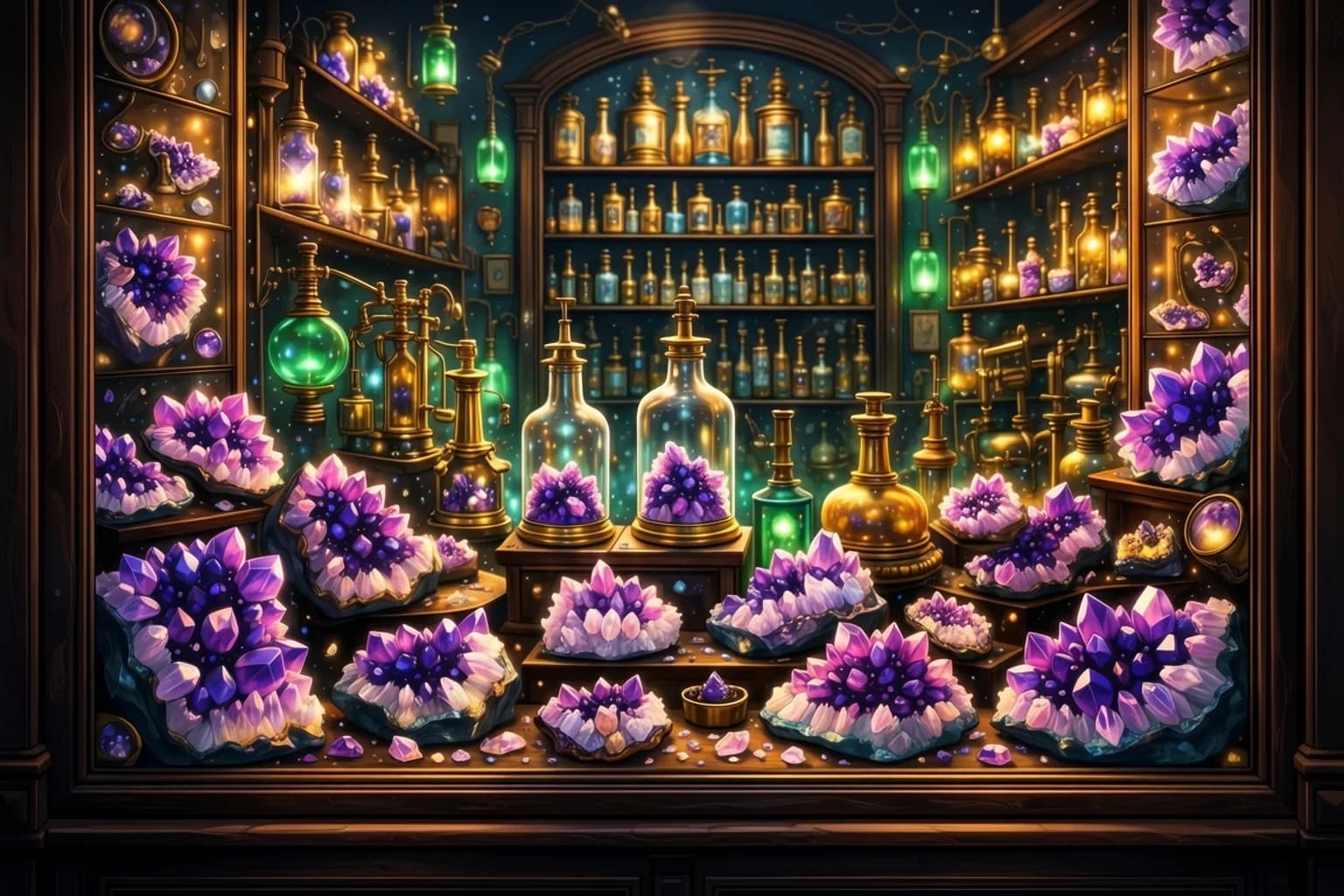
Of all the practices this series has audited, crystal healing has the largest gap between its perceived age and its actual paperwork. The amethyst on the nightstand feels Neolithic, a wisdom older than writing. The system it belongs to, this stone for anxiety, that one for abundance, chakra-matched and moon-charged, is, in its familiar form, a product of the 1980s, younger than several handbags in my closet.
As ever: the true history first, the unexpected kindness after.
What Is Genuinely Old
Humans have always loved special stones; that part is authentically ancient. Egyptians buried their dead with lapis and carnelian amulets. Roman naturalists catalogued gem lore. Medieval lapidaries assigned virtues to stones, sapphires for wisdom, and apothecaries ground gems into (useless, expensive) medicines for royalty. Across cultures, stones served as amulets, status, and sacrament.
But notice what is missing from all of it: the modern system. No ancient Egyptian placed rose quartz on the heart chakra, not least because, as this series has covered, the rainbow chakra ladder itself is a twentieth century assembly. The old stone-lore was scattered, contradictory, and mostly about protection and status, not energy healing.
The Modern Assembly
The crystal aisle as we know it was built in identifiable layers. Nineteenth century spiritualism and Theosophy supplied the vocabulary of vibrations and subtle energies. Mid-twentieth century New Age culture married stones to the newly imported chakra system. Then the 1980s did the decisive work: bestselling crystal handbooks codified which stone heals what, California boutiques and metaphysical fairs built the retail channel, and a durable industry was born, now worth billions and restocked, ironically, through some of the least spiritual supply chains on earth.
The scientific record, for completeness: controlled studies find crystal experiences fully explained by expectation and suggestion. The famous piezoelectric property of quartz, beloved of pamphlets, makes watches tick; it does not interface with grief.
The stones are ancient. The system is younger than disco. Holding both facts at once is the whole discipline of this series.
Why I Still Keep My Grandmother's Garnet
And now the turn I always make, and make sincerely. In my desk drawer in Prague sits a small garnet my grandmother carried through years I have written about elsewhere. It healed nothing, chemically. It was, and remains, something better: a portable anchor, a thing to close a hand around in waiting rooms, a physical object that says someone loved you and survived worse.
That is, I suspect, what the crystal aisle actually sells, beneath the vocabulary: tangible anchors for intangible hopes, permission to sit quietly for a moment with an intention and a beautiful object. Humans have always needed exactly that, which is why the practice feels ancient even though the catalogue is new. So keep the amethyst if it steadies you. Just know that the steadiness is yours, not the stone's, which means, conveniently, that you carry it even when the nightstand is far away.