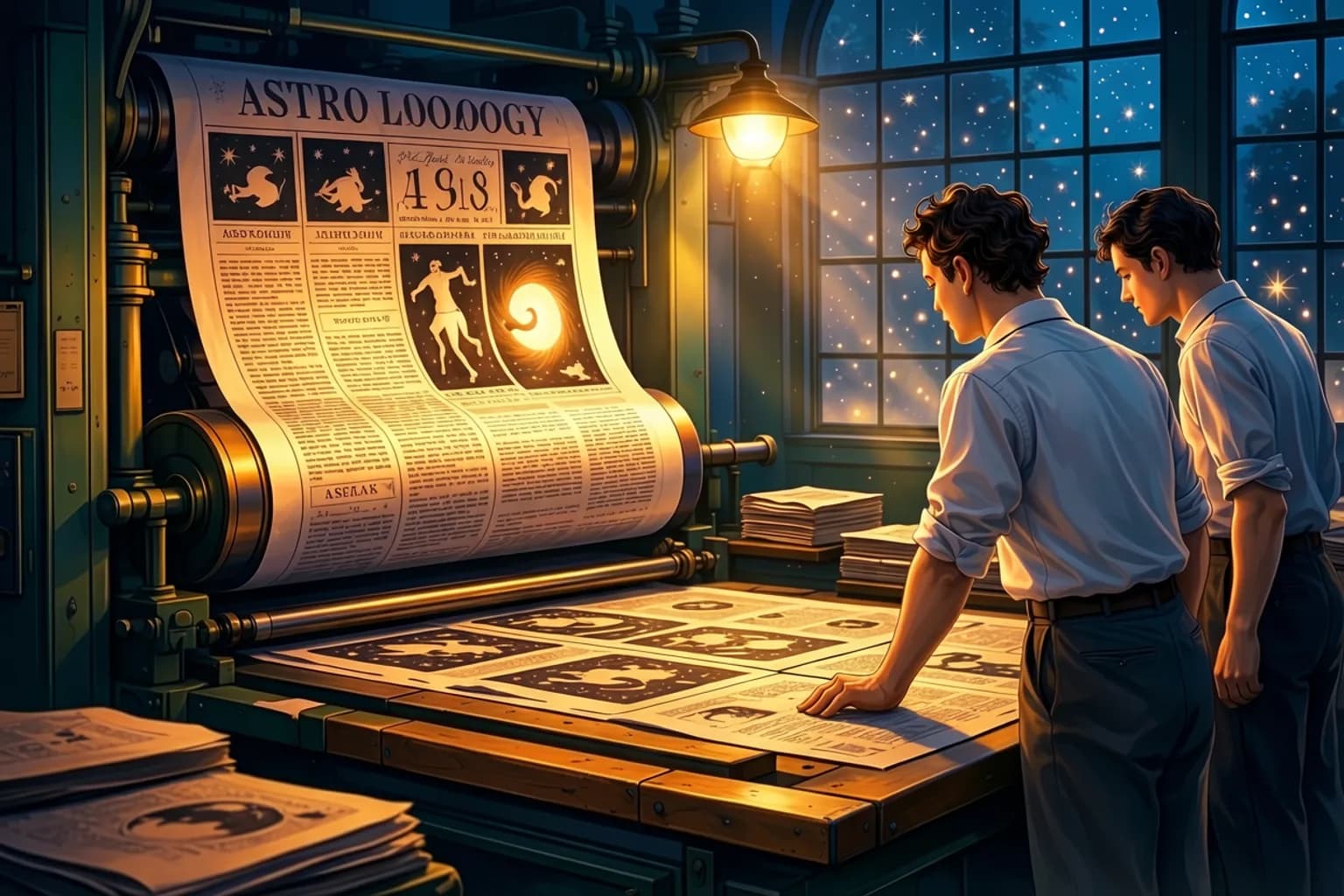
Astrology is ancient. The daily horoscope, the twelve-paragraph format your aunt reads with her coffee, telling all Geminis everywhere to expect a surprising email, is not. It has a birthday, a byline, and a princess, and the story of how it conquered the world's breakfast tables is one of my favourite case studies in how modern traditions get manufactured by accident.
A Princess and a Deadline
In August 1930, Princess Margaret was born, and a British Sunday newspaper wanted a fresh angle on the royal birth. An editor commissioned the society astrologer R. H. Naylor to cast the infant's chart. Naylor obliged, predicting an eventful life, and added, almost as filler, a few forecasts for ordinary readers born in certain weeks.
Then came the accident that built an industry: in a follow-up piece, Naylor suggested British aircraft might be in danger around a certain date, and within days the airship R101 crashed in France, killing most aboard. The hit, vague as it was, made him famous. The paper gave him a regular column, and to make star-wisdom scale to a mass readership, the format simplified itself: twelve sun signs, one paragraph each, your future by birth month. Circulation discovered what editors have known since: the stars sell.
An Ancient Art, Flattened for Print
Here is what the format quietly discarded. Traditional astrology, whatever one thinks of its claims, was an intricate craft: a chart cast for the exact minute and place of birth, planets in houses, aspects calculated, the sun sign merely one ingredient among dozens. The newspaper column reduced all of it to the single ingredient that requires no calculation, because every reader knows their birthday.
Serious astrologers complained immediately, and have complained for ninety years since, that sun-sign columns are to their craft what a fortune cookie is to philosophy. The complaint changed nothing. The format was simply too perfect for print: personal yet mass-produced, daily yet eternal, twelve paragraphs that write themselves.
The daily horoscope is not ancient wisdom condensed. It is a 1930 circulation gimmick that outlived every newspaper trend that birthed it.
Why It Worked, and Still Works
The psychology is well documented and rather endearing. Statements crafted to be generally true of everyone, you have been doubting yourself lately, an opportunity needs courage, are reliably read as personally, uncannily accurate; researchers call it the Barnum effect after the showman. Add the morning ritual, the gentle prompt to imagine the day ahead, and the column earns its keep regardless of the stars.
And that, as ever in this series, is where my scepticism softens. My grandmother read her horoscope in the Prague paper every morning of my childhood, and what I remember is not the predictions. It is the two minutes she sat still with her coffee, considering her day as a thing with weather, asking what she might watch for. The column was a tiny daily rehearsal of attention. The stars were never consulted; a man named Naylor and his thousand successors made it all up on deadline. The two minutes were real. They usually are. That is the trade this whole genre offers, and at one paragraph a day, it remains one of the cheaper ones on the market.