My colleague Mei reads the cards nightly and tells you, honestly, that belief is part of the medicine. My job in this series is the other half of the honesty: the history. And the history of tarot is my favourite in all of esoterica, because the real story involves Italian aristocrats, a French wigmaker's son, and one of the most successful cases of invented tradition on record.
A Game, for Three Hundred Years
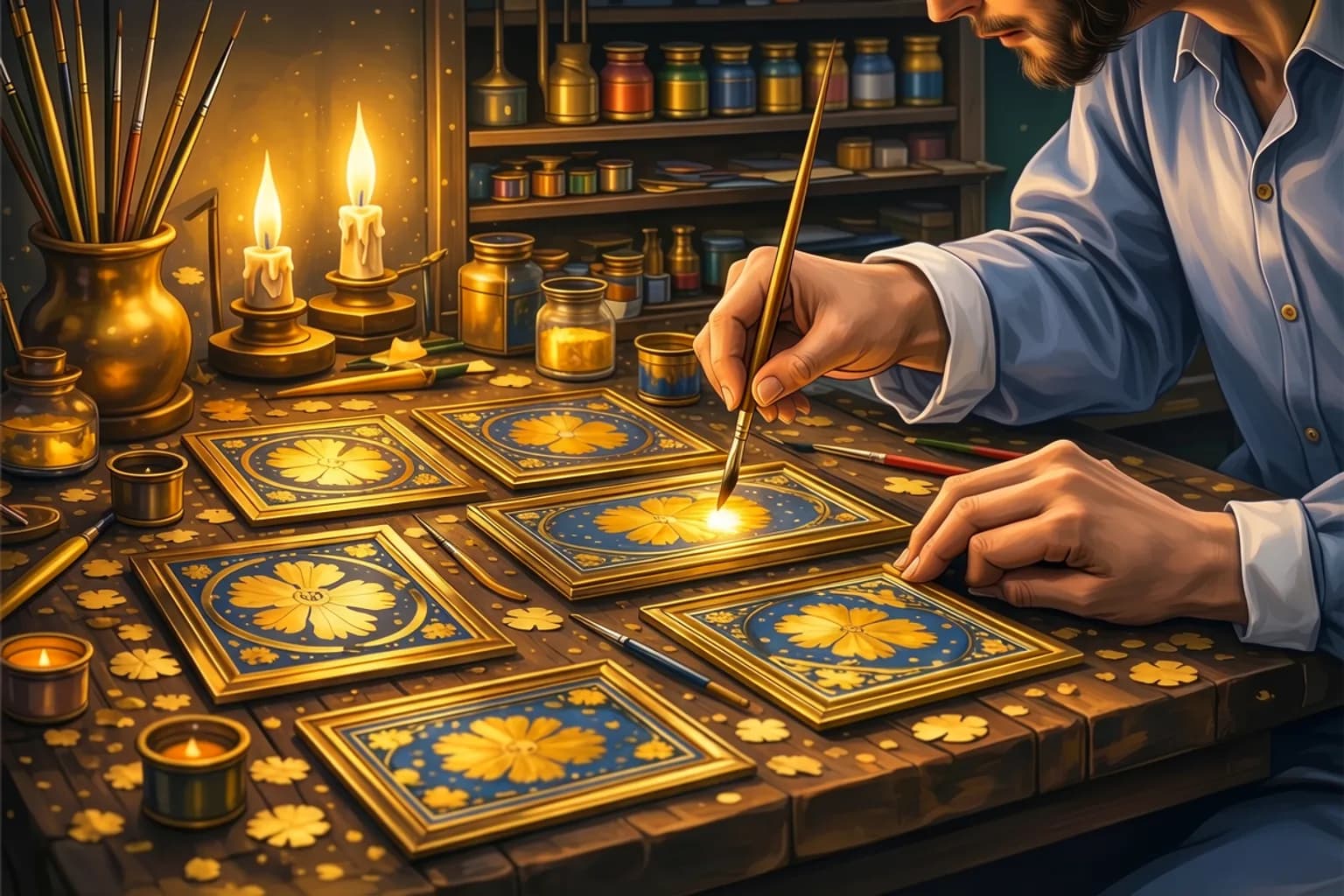
Tarot enters history in northern Italy in the early fourteen hundreds, at the courts of Milan and Ferrara, as a card game. The game was called trionfi, triumphs, the ancestor of our word trump. A standard deck gained a fifth suit of picture cards, allegories of the kind every educated Renaissance person knew: the Emperor, the Pope, Love, Death, Fortune, the Fool. Beautiful hand-painted decks were commissioned for weddings. People played it the way families play cards at Christmas, which in my childhood in Prague was a blood sport, so I do not say it dismissively.
For roughly three centuries, that is all tarot was. No divination. No mysteries. There are surviving sermons complaining about gambling with the cards, and none complaining about fortune telling, because nobody was doing any.
The Reinvention
Then came the seventeen eighties in Paris, and a scholar named Antoine Court de Gebelin, who looked at the trumps and announced, on no evidence whatsoever, that they were the surviving pages of the Book of Thoth, the lost wisdom of ancient Egypt. It was a thrilling idea. It was also entirely wrong: when the Rosetta Stone was deciphered decades later, nothing of the sort emerged. But by then a professional fortune teller called Etteilla had printed the first divination decks, and the legend had escaped the laboratory.
The occult societies of the nineteenth century built grandly on the legend, and in 1909 the deck most of the world now knows, drawn by Pamela Colman Smith under Arthur Waite's direction, fixed the imagery forever. Smith, a working illustrator, was paid a small flat fee for the seventy eight images that would sell in the hundreds of millions. If the cards owe anyone, they owe her.
Tarot is not ancient Egyptian wisdom. It is a Renaissance card game that, three centuries later, learned to tell fortunes, and then became something genuinely interesting anyway.
Why I Still Respect the Cards
Here is where the sceptic surprises you. The invented pedigree annoys me; the practice itself does not. Strip away Egypt and what remains is a set of seventy eight images of the human situation, refined by centuries of artists, that people use as prompts for structured reflection. Psychologists have a name for what a good reading does: it externalises the inner conversation, lays it on the table where it can be seen and rearranged.
You do not need the cards to be magic for that to work. You need them to be good mirrors, and five hundred years of human attention has made them very good mirrors indeed. My grandmother read coffee grounds with the same seriousness, and the grounds had no pedigree at all. What mattered was the conversation that happened over the cup. The cards earn their place at the table the same way: not by where they came from, but by what they help people see.