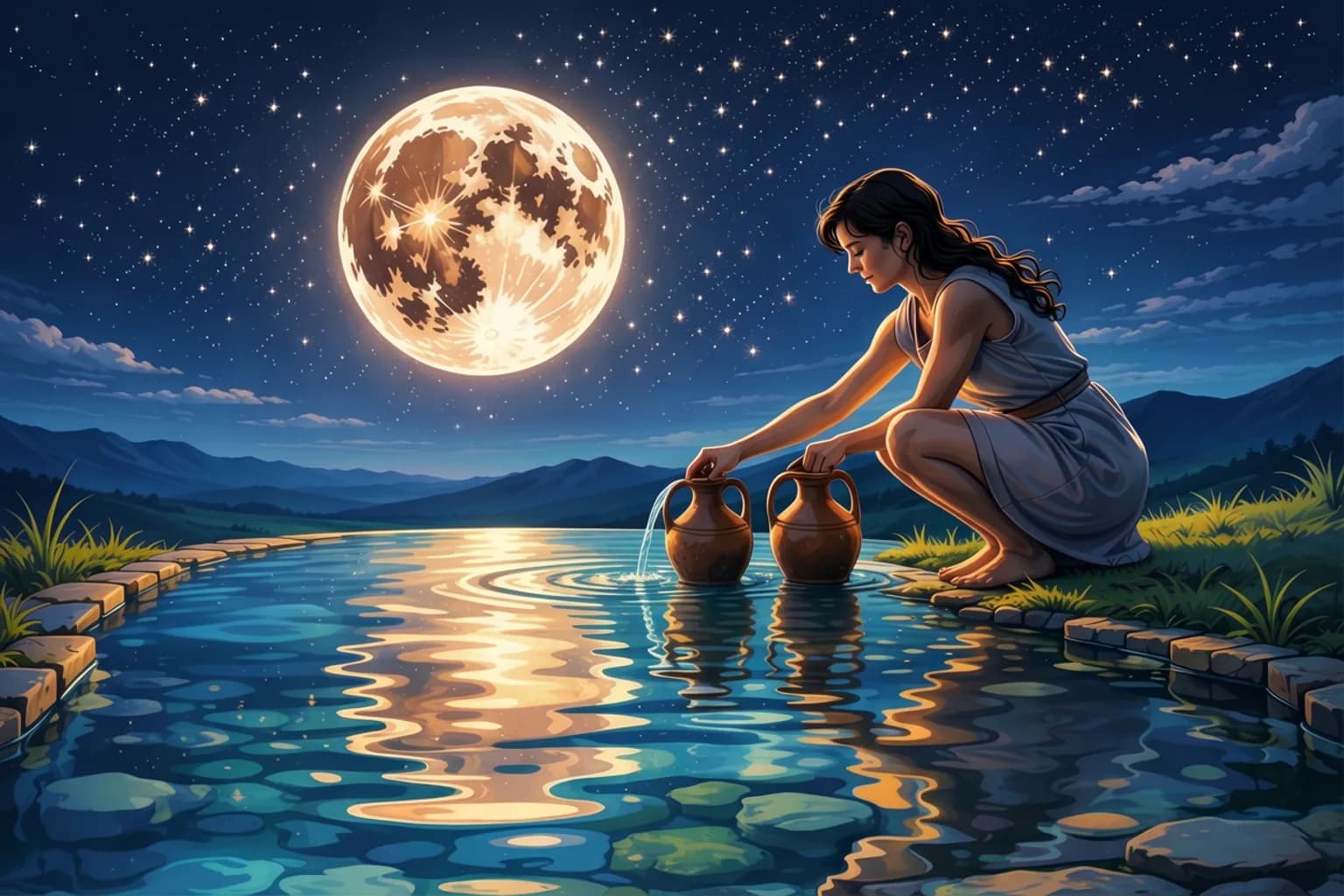
The deck's mercy has an address, and it is card seventeen. After the Tower's lightning, the Star: a woman kneeling at the water's edge under an enormous open sky, one foot on land, one in the pool, pouring water freely from two jugs, onto the earth, back into the water, keeping none. Above her, one great star and seven small ones. She is naked, and for the first time in the whole sequence, nobody in the image is defending anything.
The order is the teaching, and I say it at every table where the two cards fall together: the Star does not visit fortified lives. She comes after the walls have failed, when there is finally nothing left to hide behind, and she demonstrates, kneeling in the wreckage's quiet, that this was the condition hope had been waiting for all along.
What the Star Means
Upright, the card gathers the convalescent graces:
- Hope, the durable kind: not optimism about outcomes but trust in renewal itself
- Healing in progress: the wound after the crisis, finally clean, finally closing
- Openness: the armor off, the pretence ended, the nakedness that the Tower made survivable
- Generosity without accounting: the jugs pour onto land and water alike; renewal spends itself freely or it is not renewal
She is the deck's convalescence: the card of the second month after the worst thing, when the light comes back not as fireworks but as a faint, fixed point that does not move when the wind does.
Reversed: The Sky Doubted
Reversed, the Star names hope's failures of nerve: the cynicism kept as armor after the armor's uselessness was proven, the healing refused because wounds had become identity, the faint fixed light dismissed because it is not yet dawn. When she lands reversed in my journal, the question is gentle, as this card insists everything be: where have I decided, prematurely and on bad evidence, that renewal is for other people?
The Star promises nothing on a schedule. She promises only what her sky shows: that after the lightning, the fixed lights are still there, and were there throughout.
Where This Really Comes From
The honest history, faithfully. The early decks' Star was simpler: a figure or astronomer beneath a great star, in some traditions linked to the Magi's star, navigation's oldest meaning, the light you steer by rather than the light you possess. The kneeling water-bearer, the two jugs, the ibis in the tree arrived with the occult redesigns and the 1909 Smith deck, which braided in Aquarian imagery and, knowingly or not, built the perfect sequel to its own Tower. Five centuries of hands, as ever in this series, slowly assembling the exact medicine the sequence needed at card seventeen.
My grandmother kept her own Star in the I Ching's hexagram of the well: the village may change, her pencil note said, the well does not. Hope, in both her traditions and mine, was never weather. It was infrastructure.
Common Questions
Is the Star a yes? The gentlest yes in the deck, with its tense corrected: yes, and it is already underway, quietly.
What does the Star mean in love? Healing in or toward a bond: honesty without armor, the relationship as a place where wounds close. After a rupture, the first card of genuine repair.
Star versus the Sun? The Star is the night light, faint and faithful; the Sun, two cards on, is full day. Convalescence first, then noon. The deck does not skip steps, and neither do people.
A Reflection, Not a Prediction
When the Star appears, locate your fixed light: the one thing the recent storm did not take, the friend, the practice, the small unbroken faith, and pour something tonight without accounting, the way her jugs do: the message sent without scorekeeping, the help given without invoice. Hope, this card has taught me across twenty years, is not found. It is rehearsed, two jugs at a time, at the edge of whatever water is left.