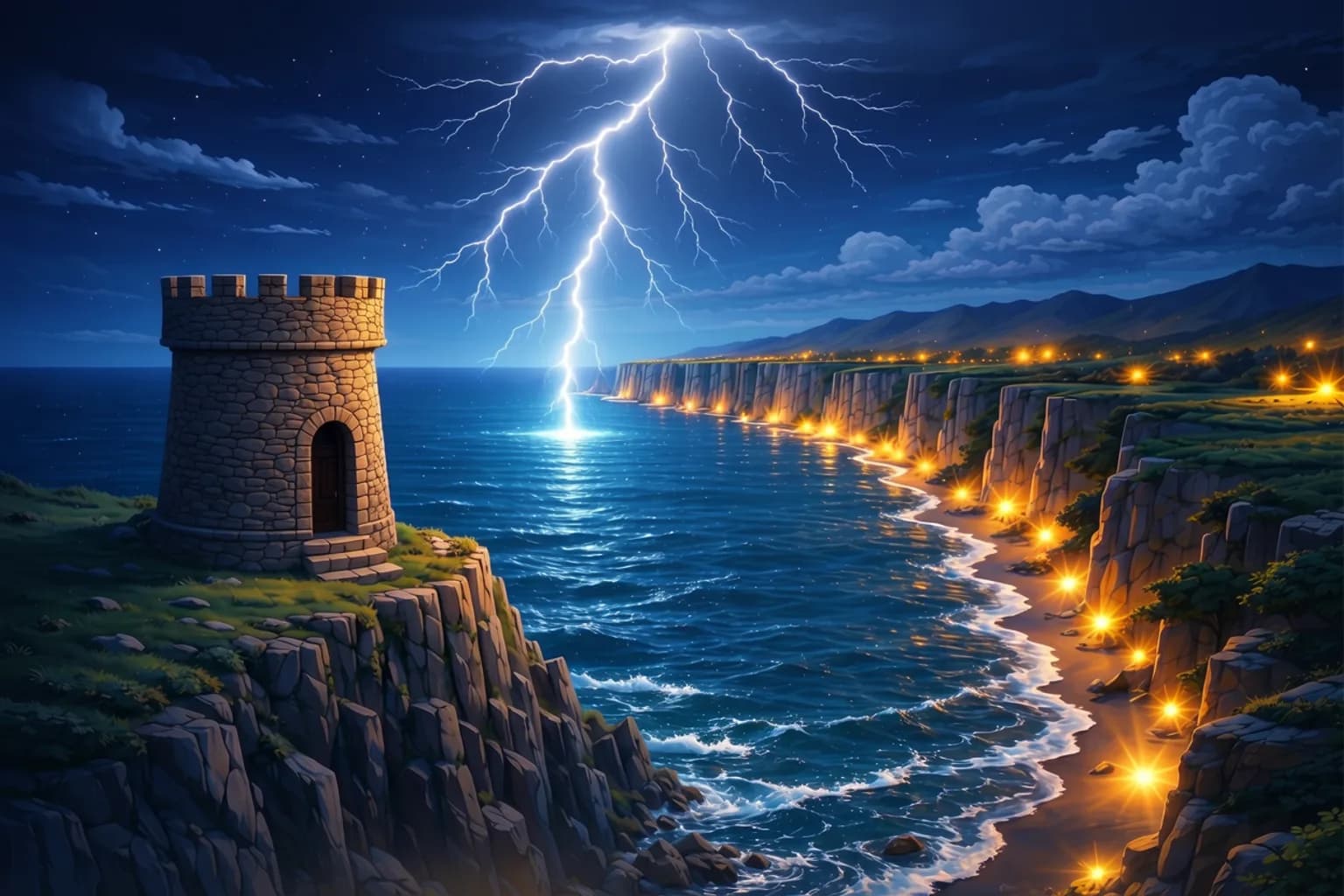
Card sixteen is the one nobody wants and everybody, eventually, recognises. A tower on a black peak, struck by lightning; its crown, literally a crown, blasted off; flames at the windows; two figures falling head-first through the night. There is no comforting detail hidden in the corners this time. The Tower is the deck's thunderclap: the sudden collapse of a structure that was, the lightning reveals, built wrong.
And yet, after twenty years of tables, I tell querents the truth about this card with a steady voice: I have never once seen the Tower destroy anything that was sound. It has a perfect record. It only ever takes the buildings that were already failing, and it takes them honestly, all at once, instead of by decades of leaks.
What the Tower Means
Upright, the card gathers the demolition truths:
- Sudden collapse: the job, the certainty, the arrangement that falls in an afternoon
- Revelation by force: the truth that arrives as lightning because it was refused as letters
- False structures exposed: the crown blown off; whatever was built on pretence loses its roof first
- Liberation in disguise: the falling figures, note, are falling out of a burning building
The Tower follows the Devil in the sequence, and the order is the teaching: card fifteen showed the comfortable cage; card sixteen is what happens when the cage's rent finally comes due. What we will not walk out of, life sometimes burns down around us.
Reversed: The Collapse Resisted
Reversed, the Tower names the postponed demolition: the structure visibly failing and frantically propped, the truth dodged another season, disaster averted in a way that merely reschedules it. Sometimes, more kindly, it marks the internal version: the worldview collapsing privately, the quiet crisis nobody at work can see. When it lands reversed in my journal, the question is structural: which of my walls am I repainting instead of underpinning?
The Tower never strikes the truth. It strikes what was built instead of the truth, which is why nothing it takes can honestly be called a loss.
Where This Really Comes From
The honest history, faithfully. The early Italian decks called this card the House of God or the House of the Devil, and its image, a tower struck by divine fire, spoke a language every Renaissance player knew: the Tower of Babel, pride built tall enough to be noticed. Lightning as heaven's editorial opinion was not a metaphor to that audience but a weather report. The occultists layered on their readings, and the Smith deck froze the falling crown, the detail that keeps the card honest: what the lightning targets is never the stones. It is the presumption on top of them.
My grandmother's I Ching holds the same weather in its hexagrams of shock and splitting apart, and her pencil note beside one of them has steadied me through two personal Towers: thunder, she wrote, is also rain coming.
Common Questions
Is the Tower the worst card? It is the most sudden card. The worst years of most lives, querents teach me, were the propped years before their Tower, not the strike itself.
What does the Tower mean in love? A revelation that changes the structure: the truth told or discovered, the arrangement that cannot survive honesty. What rebuilds afterward is built on ground for the first time.
Tower versus Death? Death is the season ending on schedule; the Tower is the structure failing in a single night. One is autumn, the other is lightning, and the deck includes both because lives do.
A Reflection, Not a Prediction
When the Tower appears, inspect your structures before the weather does: name the one arrangement in your life that survives only because certain truths stay unspoken. Then speak one of them, in the smallest safe room available, this week. Voluntary demolition, done early, is renovation. The Tower's entire curriculum, taught with lightning, is that the involuntary kind was never actually cheaper.