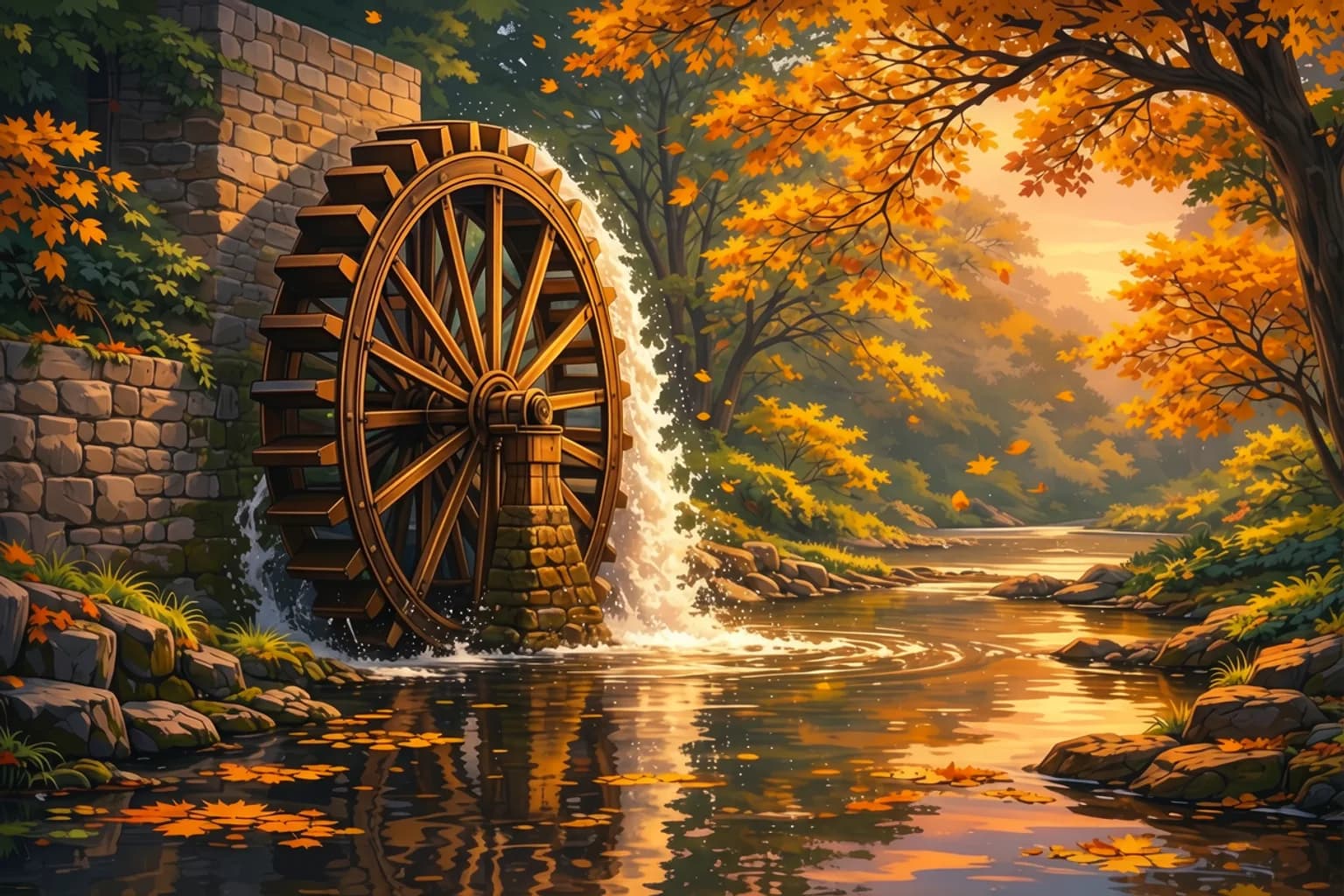
At the centre of the Major Arcana, a wheel spins with creatures rising on one side and falling on the other, and a sphinx on top holding a sword it will not get to keep. The Wheel of Fortune is the deck's tenth card and its most ancient idea: that circumstance turns, that everyone rides, and that the riding, not the rigging, is the human portion.
This is the card querents most want to read as a lottery ticket, and the card most determined to teach something better. In my practice it arrives at turning points, in both directions, and its message is identical either way.
What the Wheel Means
Upright, the Wheel gathers the cyclical truths:
- A turn in progress: circumstances shifting, often unearned in both directions
- Cycles recognised: seasons, markets, moods, relationships, all wheels within the wheel
- Luck named honestly: the share of life that was never your doing, for credit or blame
- The still centre: the hub the rim forgets, the self that watches the turning
The card's deepest geometry is the difference between rim and hub. On the rim, every turn is destiny: exaltation at the top, despair at the bottom. At the hub, the same wheel is weather. The card never asks you off the wheel; it asks where on the wheel you keep your weight.
Reversed: Fighting the Turn
Reversed, the Wheel names resistance to what turns: clinging to the crest as it passes, calling a season a betrayal, or its mirror, fatalism, riding limp as if the hands had no work because the wheel has its own. When it lands reversed in my journal, I ask which error is mine: am I gripping the rim, or have I dropped the reins I do hold, the responses, the preparations, the meaning made of the turn?
The Wheel teaches the oldest division of labour: the turning is fortune's. The footing, the breathing, and the meaning are yours.
Where This Really Comes From
The honest history, and this card carries the oldest cargo in the deck. The Rota Fortunae, fortune's wheel, was the master image of the medieval mind: the goddess Fortuna spinning kings to dust and beggars to crowns, painted in manuscripts, preached from pulpits, sung in the verses that became Carmina Burana. The trionfi decks simply dealt the era's most famous icon into the game. The Egyptian trimmings, the sphinx, the strange letters, arrived with the eighteenth and nineteenth century occultists; the medieval original needed no exotic pedigree, having ruled the imagination of a continent for a thousand years.
My grandmother's I Ching, built entirely on the turning of lines into their opposites, would have nodded at this card without translation: every fullness empties, every emptiness prepares to fill. Two traditions, one wheel.
Common Questions
Is the Wheel a good card? It is an honest one: a turn is coming or underway. Whether that is good depends on which part of the cycle you have been calling permanent.
What does it mean in love? A relationship entering a new season: the falling-in or the settling, the winter or the spring. The counsel is the same: love the person, not the position on the wheel.
Wheel versus the Chariot? The Chariot is the will driving; the Wheel is what the road does regardless. Mastery of self meets the limits of mastery, card seven meeting card ten, exactly in order.
A Reflection, Not a Prediction
When the Wheel appears, name your current position honestly: rising, cresting, falling, or at the bottom where, the old image promises, the only available direction has quietly changed. Then move one habit from rim to hub: a practice that holds in all four positions, the walk, the page, the prayer, the people. Fortune spins the rim on its own schedule. The hub is built by hand, in advance, and it is the only seat from which the view is ever steady.