Here is one of the great riddles of world religion, the kind I collect the way other men collect stamps. Hinduism honours a trinity: Brahma the creator, Vishnu the preserver, Shiva the dissolver. Vishnu and Shiva each command hundreds of millions of devotees and temples beyond counting. Brahma, the one who made everything, has almost none. A famous temple at Pushkar, a scattering of others, and that is nearly all. The architect of the universe receives barely a card on his birthday.
Why? The tradition itself tells stories to explain it, and the stories are wonderful.
The Four-Faced Maker
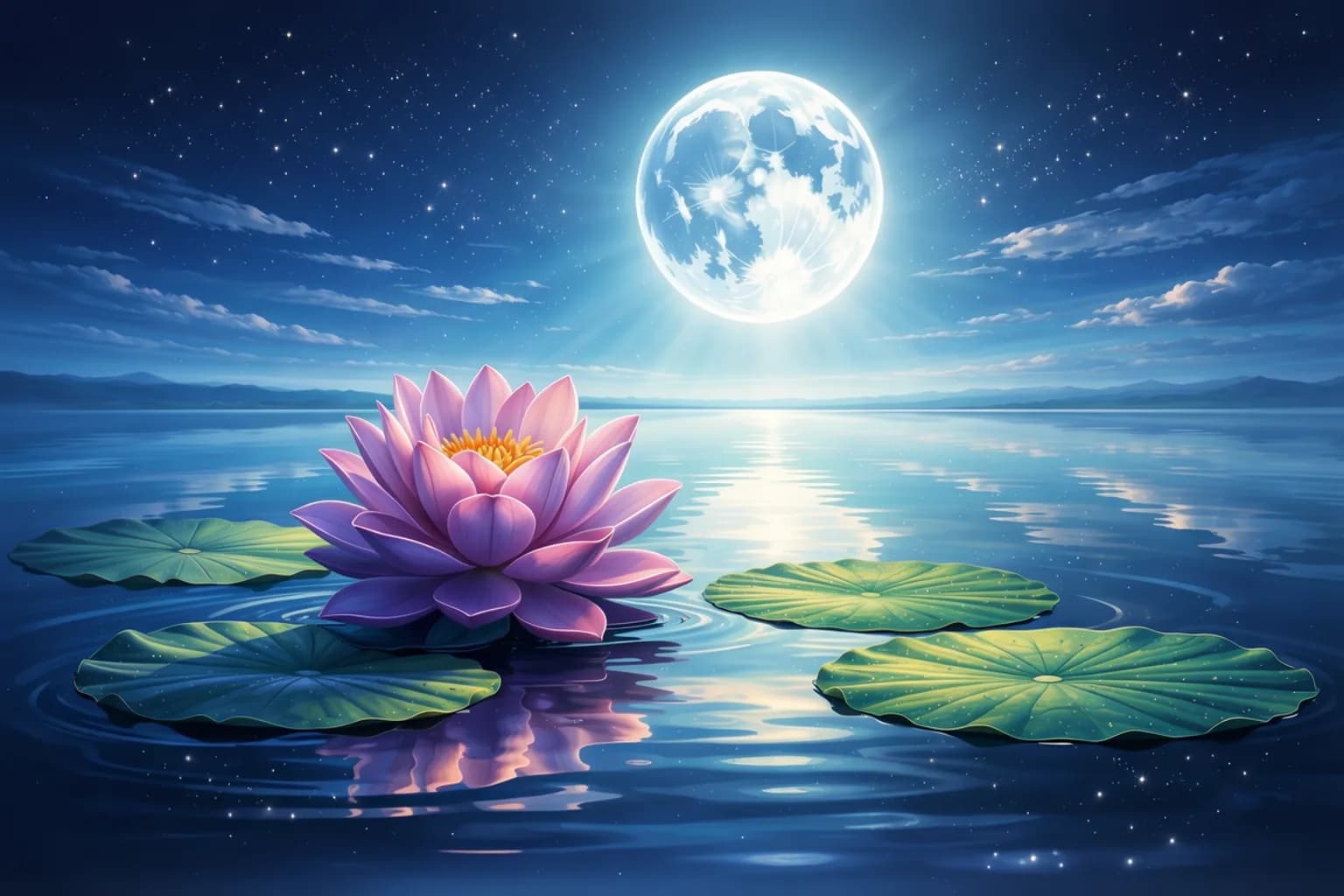
Brahma is pictured with four faces, reading the four Vedas, looking in the four directions: knowledge surveying everything it has made. He is born, in the most common image, from a lotus that grows out of Vishnu's navel as Vishnu dreams on the cosmic ocean. Creation, in this picture, blossoms out of preservation's sleep, which is the kind of sentence that keeps me in this profession.
His consort is Saraswati, goddess of wisdom and speech, and the pairing is the theology: creation married to knowledge, neither functioning alone.
Why the Creator Lost His Following
The myths offer several explanations, each revealing:
- In one, Brahma lies about reaching the top of an infinite pillar of light that is Shiva, and is cursed for the lie: the creator who falsified his accomplishments loses the right to worship.
- In another, he pursues his own creation with improper desire, and devotion turns away from him.
- The drier, scholarly reading: his work is finished. The universe is made. Devotion flows to the gods still on duty, the preserver and the transformer, the ones who answer prayers about this harvest, this illness, this child.
I find the third explanation the most human. We pray to the powers we still need. The finished work, however magnificent, gets a plaque.
Brahma is the patron saint of every founder whose creation outgrew him: essential at the beginning, forgotten by the maintenance schedule.
The Story Behind the Stories
Historically, Brahma the creator god should not be confused with Brahman, the formless absolute of the Upanishads; the names tangle every newcomer, and the difference matters. Brahma the deity rose to prominence in the epic period, then genuinely declined as devotional movements gathered around Vishnu, Shiva, and the Goddess through the medieval centuries. The riddle of the unworshipped creator is, in part, simply visible history: a god whose job description belonged to an earlier era of the tradition.
What Brahma Teaches
For me, the empty temples are the teaching. Creation is a phase, not a permanent throne; what is made passes immediately into the keeping of preservers and the mercy of transformers. Anyone who has built anything, a company, a family, a body of work, learns Brahma's lesson eventually: the making was your part, and the made thing belongs to time. The wise builder finishes the lotus and lets go of the credit. The tradition, with its strange affectionate honesty, made a god of exactly that.