His name is not a name but a question: Mi-kha-el, Hebrew for who is like God? The tradition reads it as a battle cry, the words flung at every pretender to the throne of heaven, and the figure who carries it has served three faiths for well over two thousand years as the same essential thing: the courage on duty at the worst thresholds.
Growing up in Beirut, where the hills are studded with his chapels and half my neighbours' sons carried his name, I learned early that Michael is less a doctrine than a reflex: the figure a frightened person reaches for when the dark presses, in any of the city's languages.
The Portfolios of the Commander
Across Jewish, Christian, and Islamic tradition, Michael's files are remarkably consistent:
- Commander of the hosts: in the Book of Revelation, it is Michael who leads heaven's armies against the dragon; in Jewish tradition, the great prince who stands guard over the people; in Islam, Mikail, among the greatest of angels
- The dragon beneath the spear: the image, painted ten thousand times, of armored Michael with the serpent pinned, evil not destroyed but held down, an honest piece of iconography, as my Ra column noted of the nightly serpent
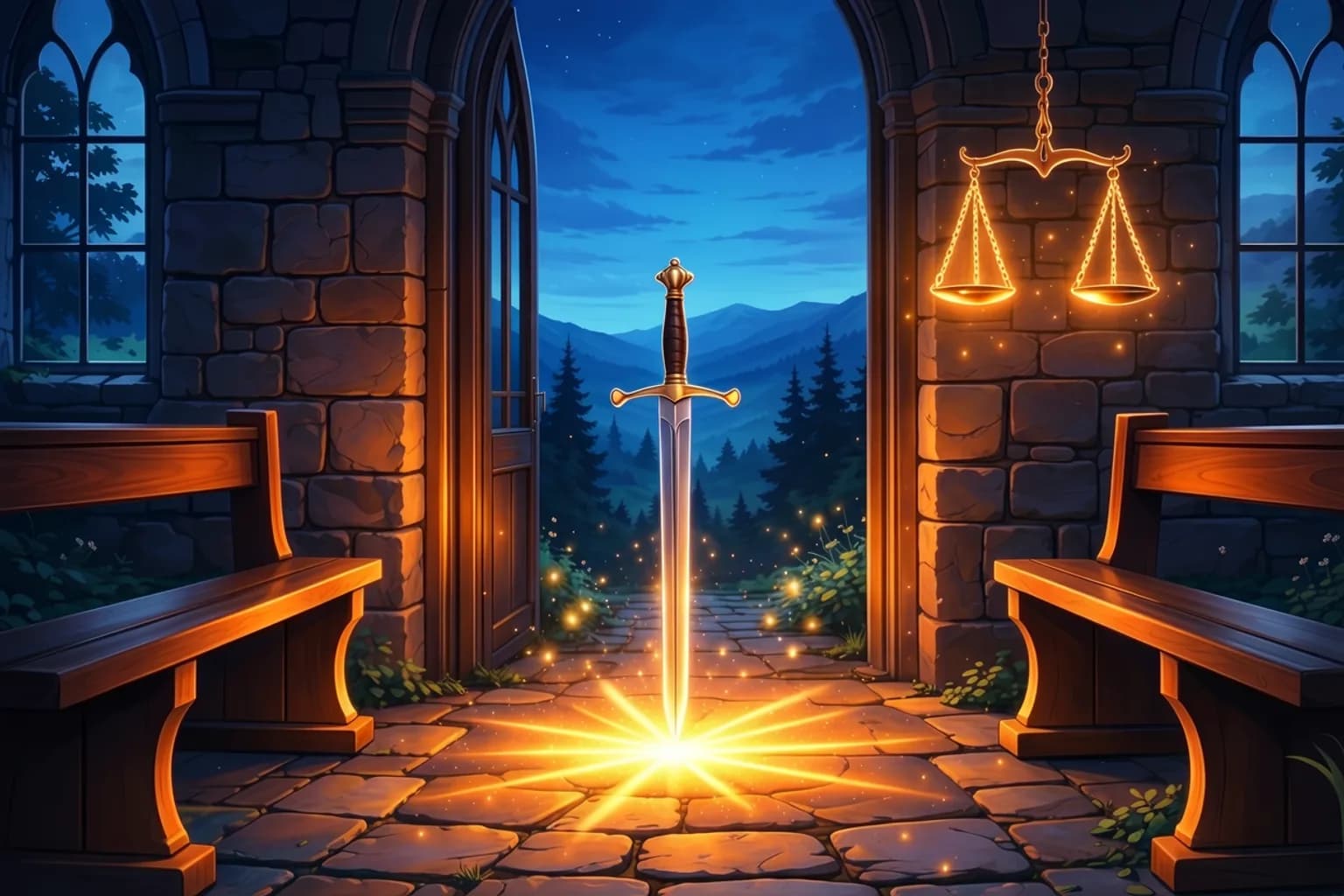
- The scales: in medieval art he holds the balance at judgment, weighing souls, the office Egypt gave Anubis, migrated to a new staffing chart with the job description intact
- Protector at death: in folk devotion everywhere, the escort of souls through the last corridor, invoked at deathbeds in villages from Ireland to Ethiopia
Michael's name answers itself: who is like God? Nobody, and the figure whose whole identity is that answer became, for three faiths, the proof that the dark's pretensions have already been contradicted once, successfully.
Where This Really Comes From
The honest history, in this series' tradition. Michael enters the record by name in the Book of Daniel, among the latest texts of the Hebrew Bible, written in the second century before our era, and scholars note the context: angelology flowered in precisely the centuries when Judaism lived under empires, influenced plausibly by Persia's elaborate hierarchy of divine attendants. Named angels with military ranks, in other words, arrive in the file exactly when occupied people needed a defender with a chain of command above the visible one.
His cult then conquered geography: Constantine built him a great shrine; the plague-ending vision over Hadrian's tomb renamed it Castel Sant'Angelo; Monte Gargano's cave, Normandy's Mont-Saint-Michel, the high places of Europe collected his name the way summits collect lightning, the sword-bearer consistently assigned the dramatic real estate. The modern angel boom, my colleague Rafael's numbers columns trace its publishing history, has recruited Michael too, as the all-purpose protector of the crystal-shop shelf; the figure has survived empires, schisms, and now retail, which may be the strongest evidence of demand in the entire file.
What Michael Teaches
That courage has always been easier to summon with a face, and that three faiths, rarely unanimous about anything, agreed on this face for the purpose. That the great image is honest about evil's status: pinned, not abolished, the spear-arm permanently employed, which matches the morning news better than triumphalism ever has. And that the name itself is the actual weapon, a question that ends arguments: who is like God? The tradition's answer, delivered with a spear through twenty centuries of frightened nights, including a few of my own city's: not this thing beneath the spear, and not tonight.