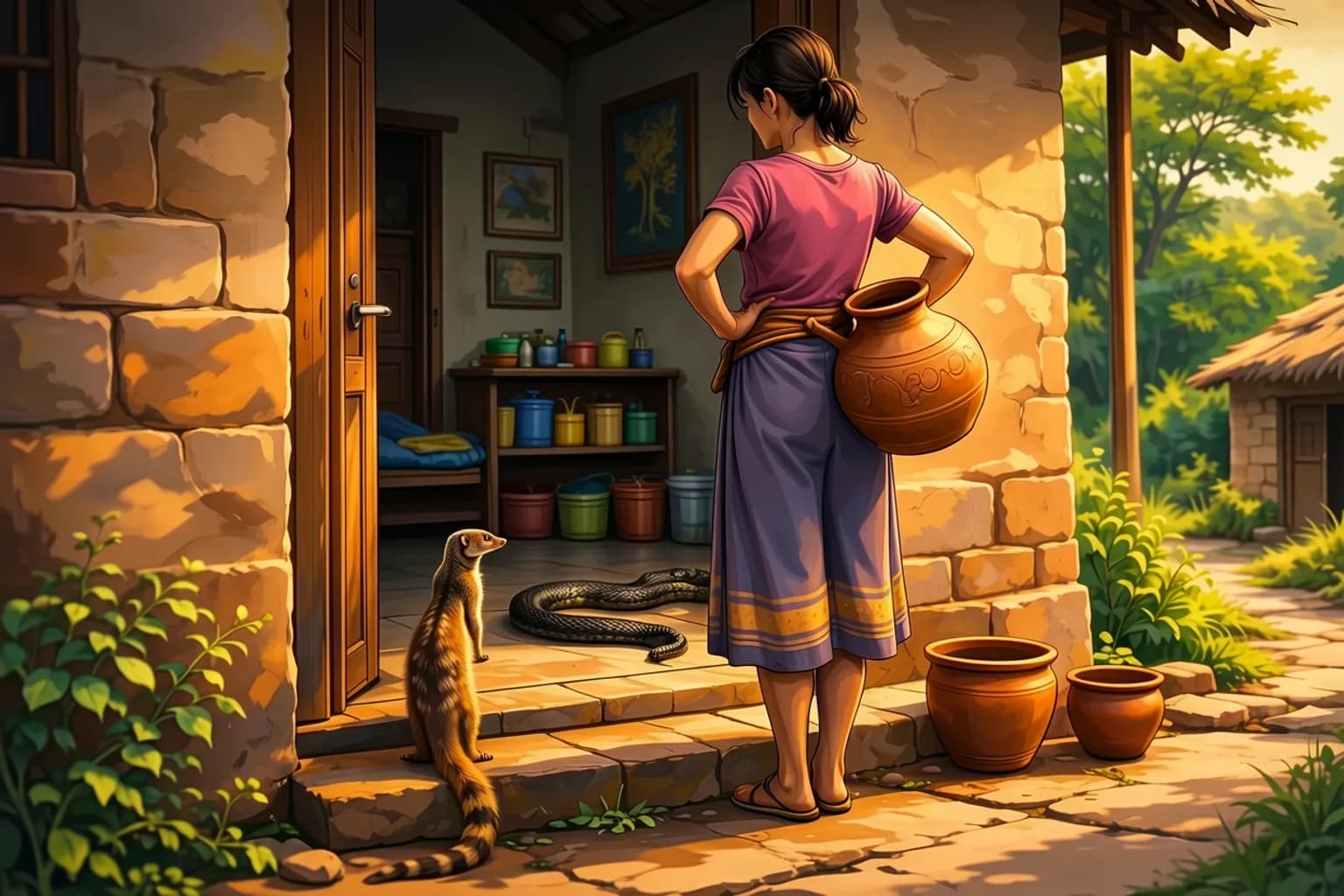
Two travellers came into a village at the end of a long war, hungry, and knocked on doors.
Nobody had anything. That was what they were told at every house, and at every house it was a lie, and the travellers knew it was a lie, and the villagers knew they knew. There had been soldiers through twice, and the harvest had been bad, and everyone in that village had a small store of something buried or bricked up or under the floor, and not one of them was going to be the first to admit it.
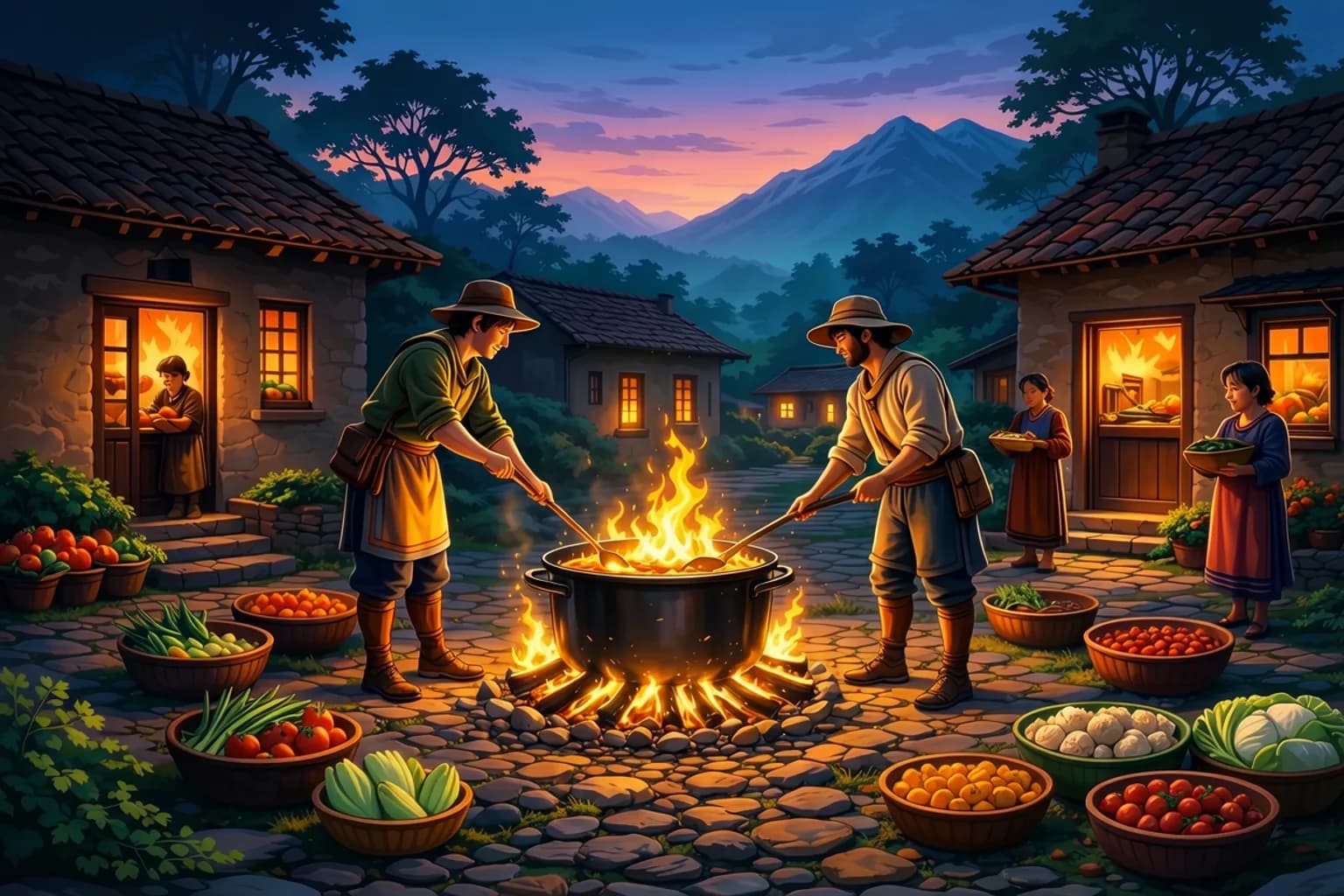
So the travellers stopped asking. They went to the square, built a fire, filled the big iron pot from the well, and set it to boil. Then one of them took a smooth stone out of his bag, washed it carefully, and dropped it in.
People came to their doorways. Someone eventually asked what he was doing.
Making stone soup, he said. He had made it many times. It was remarkable what a good stone could do, and there would be plenty for everybody.
He tasted it after a while and said it was coming along well, though he had to admit that stone soup is always at its best with a little salt.
A woman went inside and came back with salt. She had told him an hour earlier that she had nothing.
He thanked her and stirred it in and tasted again and said it was excellent now, truly, though of course the very finest stone soup, the kind you would serve at a wedding, usually has a carrot or two in it.
Two carrots arrived. Then an onion, from a man who had said his house was empty. Then a handful of barley, then some cabbage, then a piece of salt pork that somebody's grandmother produced from wherever she had been keeping it, without explanation and without meeting anyone's eye.
By evening the pot was full and thick and the whole village was in the square eating it, and there was bread from somewhere, and it went on late.
They said afterwards that they would never have believed a soup could be made from a stone.
The Lesson of Stone Soup
The village was not selfish, it was frightened. Every door that said nothing here was protecting a family. Hoarding is what people do when nobody can see whether anyone else will give, and it does not look like meanness from the inside.
Somebody has to put a pot on first. The travellers did not ask for a single thing after the first round of knocking. They started something visible and public, and made it obvious that giving would be joining rather than losing.
Small, specific, and after the fact. Nobody was asked for dinner. They were asked for salt, once the fire was already lit. Requests that size are almost impossible to refuse, and enough of them make a meal.
Where this actually comes from
It is European and it is old, and it has as many names as it has countries. The earliest printed versions we have are French, from the early eighteenth century, where it is a soup made from a pebble. In Scandinavia the same story is told about a nail, in Russia about an axe, and the trick is identical in all of them.
The modern reading has drifted, and it is worth knowing which version you are being told.
In the older tellings this is a trick story. The traveller is often a soldier or a beggar, sometimes a tramp with a reputation, and the pleasure of the tale is watching a clever poor man con a mean village out of a dinner. The villagers are the fools.
The version most people know now, largely through twentieth century picture books, turns it into a story about cooperation, in which nobody is really deceived and everybody discovers the joy of sharing.
Both are in there, which is probably why it lasted. It survived the wars and famines that produced it because it describes a real mechanism, and the mechanism does not care whether you call it manipulation or leadership. You cannot talk frightened people into generosity. You can put a pot of water on the fire in the middle of the square and ask them for salt.