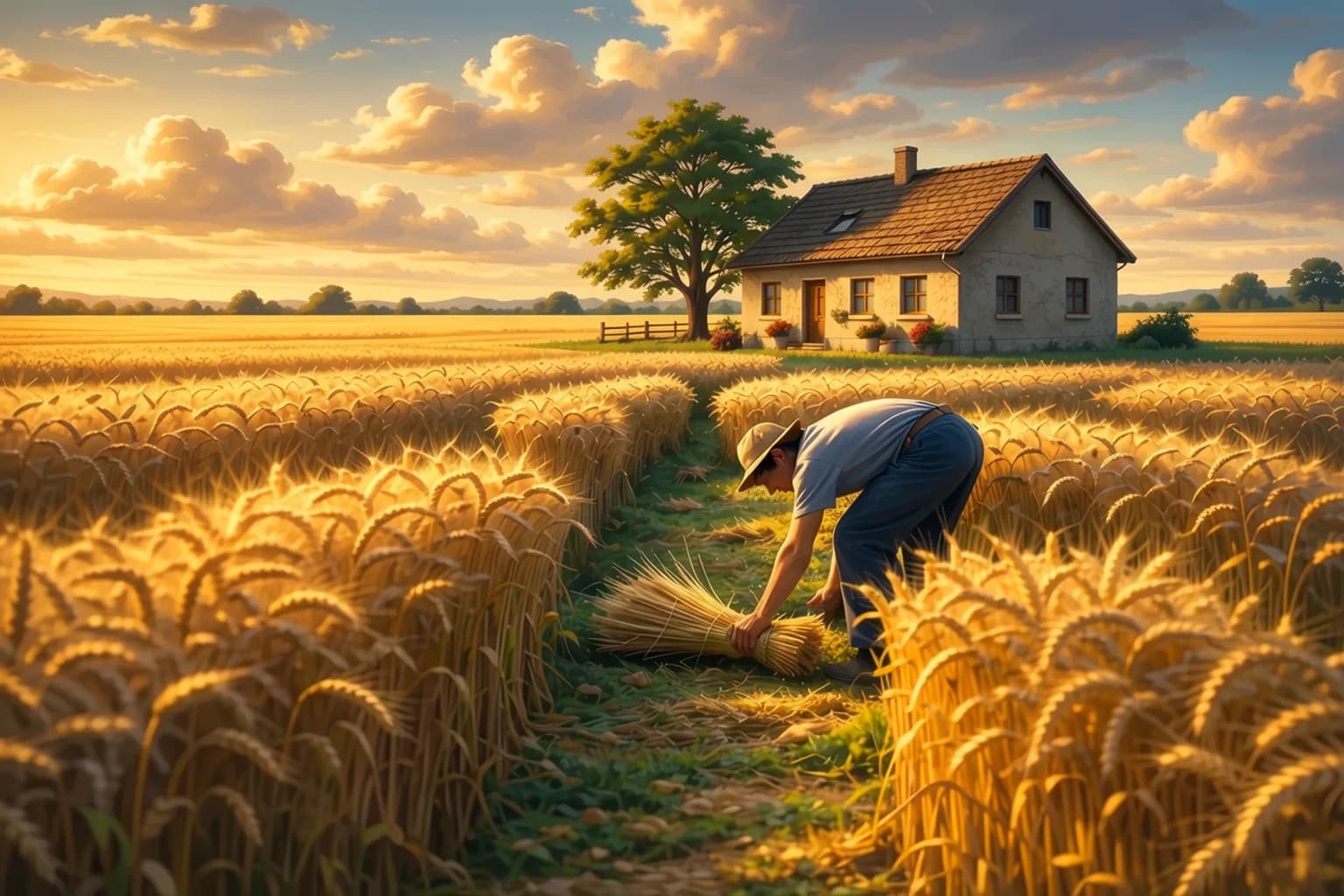
An old man was sitting with his grandson at the end of a long day, and the boy had come to him angry about something another boy had done, and was still angry about it hours later, which is how the conversation started.
The old man said there was a fight going on inside him. Not a memory of one. A fight, currently, tonight, in an old man sitting on a step.
There are two wolves, he said.
One of them is anger. It is also envy, and resentment, and self pity, and arrogance, and the small daily lie you tell to come out of a story better than you went into it. It is the part of him that keeps score, and the part that enjoys keeping score, and the part that would rather be wronged than ordinary.
The other one is joy. It is also peace, and patience, and kindness, and honesty, and the willingness to assume the best about somebody when assuming the worst would be more satisfying.
They fight, he said. Not once. Every day, all day, and they have been fighting for as long as he has been alive, and they are fighting right now while the two of them sit here.
The boy thought about it and asked the obvious question, which is the question everybody asks.
Which one wins?
The old man did not say the good one. He did not say it depends on the man. He said the one you feed.
The reason that answer lands is that it removes the comfortable version of the problem. The comfortable version is that you have a nature, and your nature is either good or it is not, and the fight is being conducted somewhere below you by forces you can only hope about.
The old man's version is worse and more useful. Nothing is being decided by nature. It is being decided by supply. Every time you rehearse the grievance you have fed one of them a meal. Every time you are decent to somebody when nobody would have noticed the alternative, you have fed the other one. You are not a spectator to this fight. You are the kitchen.
The Lesson of the Two Wolves
Both animals live there permanently. The story does not offer a version where the bad one dies. Anyone who tells you they have removed that part of themselves has usually just stopped watching it eat.
Attention is food. You do not feed the resentful wolf by acting on resentment. You feed it by going back over the incident on the drive home, improving your side, sharpening the line you wish you had used. That is a meal, and it is the meal most people serve daily without counting it.
The result is cumulative and almost invisible day to day. Neither wolf gets stronger in a way you would notice this evening. Over a year, one of them is running the house.
Where this actually comes from
Almost everywhere you meet this story, it is labelled Cherokee. It is presented as ancient Native American wisdom, usually with a grandfather and a grandson, and it is repeated in that form by teachers, speakers, and organisations who have no reason to doubt it.
There is no evidence for it. Researchers looking for a Cherokee source have not found one, and Cherokee writers have said publicly that it is not from their tradition. The oldest printed versions anyone has been able to locate are from twentieth century American Christian sermon writing, where the same story appears with different animals and a different setting, well before the Cherokee label became attached to it.
We think that is worth saying, and not only for accuracy. Hanging a modern sermon on a real people's name borrows authority from them without asking, and it buries whatever they actually teach underneath something invented.
The lesson stands on its own. It does not need to be ancient, and it does not need to belong to anybody. It only needs to be true, and the part about the feeding is true.