The premise alone is magnificent. A demon named Mahishasura, shape-shifter, buffalo-formed, wins a boon that no man and no god can kill him. Armed with that fine print, he conquers the heavens, and the great gods, Vishnu, Shiva, all of them, are driven out, defeated. In their fury and helplessness, light pours from each of them, and the lights converge, and out of that pooled fire steps something the demon's contract never anticipated: a woman.
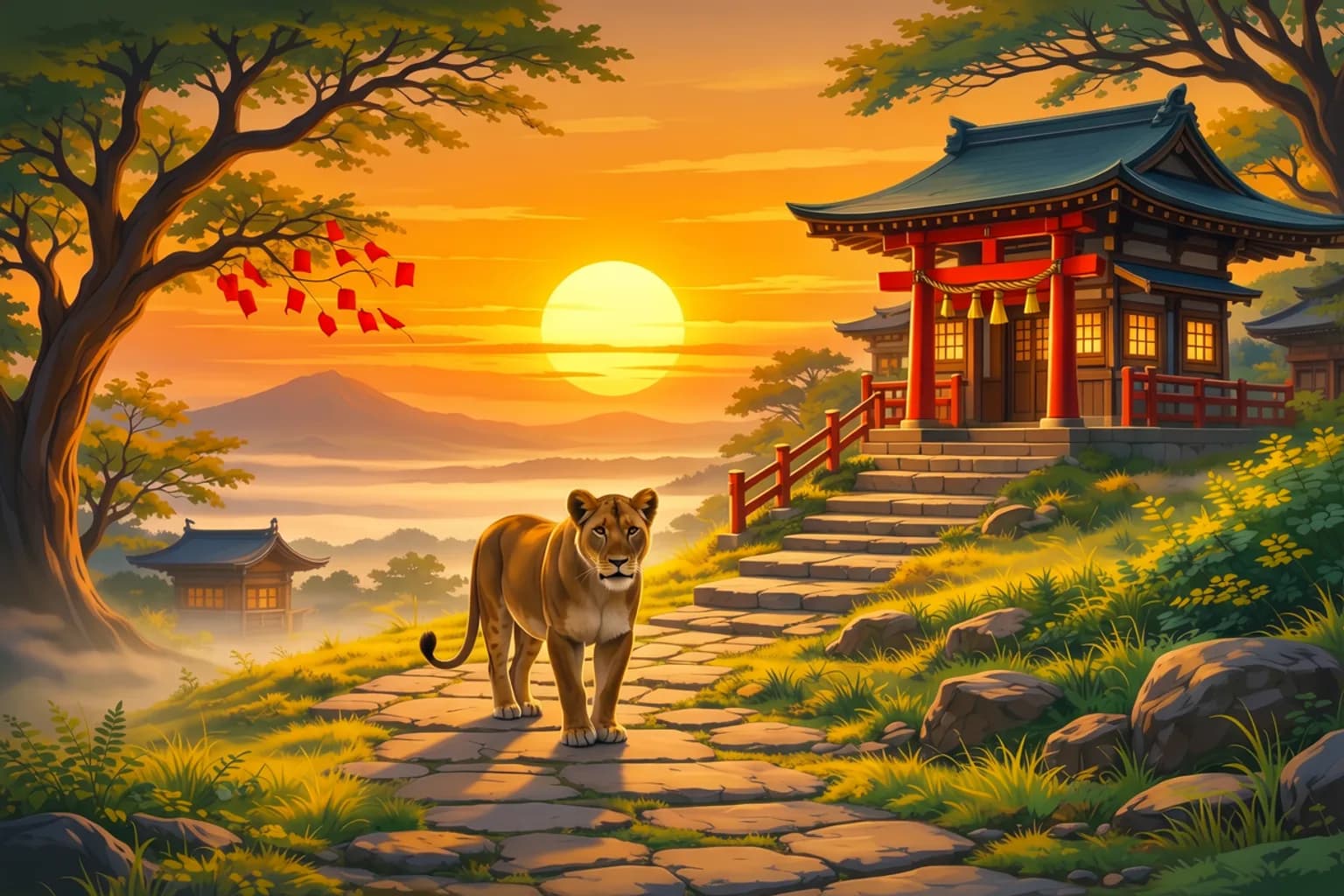
Durga rides a lion, carries in her many hands a weapon from each god who failed, and smiles slightly in nearly every image, because the outcome was never in doubt. After nine nights of battle, celebrated to this day as Navratri, she beheads the buffalo demon. The loophole, it turns out, was the whole point: the demon scorned to fear any feminine power, and his scorn was the door his death walked through.
Power With a Calm Face
What strikes me most, after years among goddess images in museum halls, is Durga's expression. Western war deities tend to snarl; Durga, mid-battle, eight arms swinging, is serene, sometimes faintly amused. The iconography is making a theological claim: this is not rage. This is order restoring itself, as untroubled as an immune system. The tradition calls her the fortress, which is what her name means, the protection that does not need to hate what it defeats.
- The lion: courage as her vehicle, wildness mastered, not killed
- The many arms: capability beyond what any single power could lend
- The weapons, all gifts: strength assembled from a community's surrender of pride
- The smile: the deepest detail; ferocity without loss of peace
Durga teaches that the fiercest force in the room can also be the calmest, and that the two facts are related.
The Story Behind the Stories
Historically, Durga's great textual moment is the Devi Mahatmya, composed around the middle of the first millennium, the foundational scripture of goddess worship in the Hindu world. Scholars see in her older streams converging, fierce local goddesses, harvest and fortress deities, gathered into one supreme figure, much as her myth describes the gods' powers converging. The text itself makes the boldest claim available: that this goddess is not a consort or a junior partner but the supreme power, shakti, of which all the gods are expressions. For millions, especially across Bengal and the north, the autumn festival of her victory remains the largest event of the year.
What Durga Teaches
Three things travel beyond her theology. That the strength which saves a situation often comes from precisely the direction power was too proud to look. That communities create their rescuers: the gods had to give up their weapons, their pride, their separate fires, before the answer could exist. And that real strength does not require fury's face; the calmest person in the crisis is usually the one the crisis cannot defeat. My aunts in Beirut, who held households together through years I will not describe, never heard of Mahishasura. They all had the smile.