If Odin is the Norse mind, Thor is the Norse arm, and the old farmers knew exactly which one they trusted. While kings and poets followed the one-eyed wanderer, the ordinary households of the north hung Thor's hammer at their necks, named their sons after him, and called on the red-bearded thunderer for the things ordinary lives actually need: rain for the barley, protection on the road, and something enormous standing between the family and the dark.
He is the most beloved of the Norse gods for the least complicated reason in mythology: he shows up.
The Hammer and Its Terms
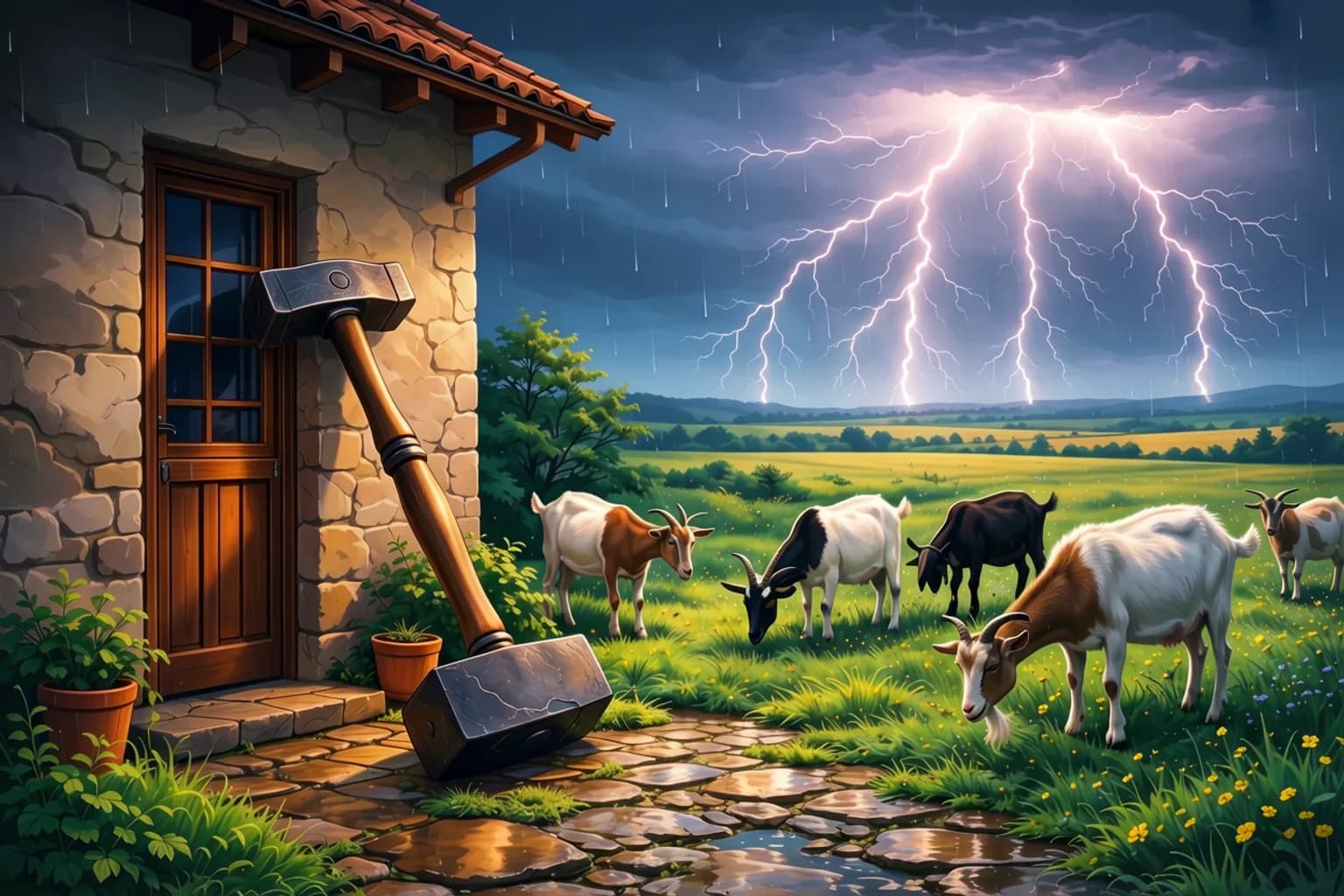
Mjolnir, the short-handled hammer forged by dwarves, is the north's great protective emblem, and its terms are precise: it never misses, it always returns, and it exists, in story after story, for one purpose, holding the wall between the ordered world and the giants who would unmake it. Thor's myths are not conquests; they are shift work. The giants press in, the thunderer drives them back, and the harvest happens because somebody enormous kept the watch.
- The hammer: protection that returns to the hand; strength as a renewable, not a spectacle
- The goats and the chariot: thunder as commute; he eats his own goats at need and hammers them back to life by morning, the provider god who replenishes what feeding others costs
- The belt and gloves of strength: power that still needs equipment; even Thor suits up
- The fishing trip: his rod-and-line bout with the world serpent itself, the protector calmly angling for the apocalypse
Thor's myths have one plot, and the north never tired of it: something monstrous approaches the fence, and something faithful meets it there.
The Comedy He Permitted
Alone among supreme protectors, Thor headlines his own comedies. The best-loved poem of the tradition dresses him as a bride, veil and all, to retrieve his stolen hammer from a giant who demanded Freyja's hand; the thunderer eats an ox at his own fake wedding, nearly blowing the disguise, and the laughter has lasted a thousand years. A strength so secure it can be laughed at, the tradition seems to say, is the only strength that can actually be trusted at the door.
The Story Behind the Stories
Historically, Thor may have out-polled Odin where it counted: place-names across Scandinavia carry Thor far more densely than the All-Father, hammer amulets surge in the archaeological record precisely as Christian crosses arrive, worn, scholars suggest, as deliberate counter-emblems, and the Icelandic settlement rolls brim with Thor-names. Thursday still belongs to him across half of Europe's languages. The thunder god of the common farm, it turns out, weathered the centuries better than the war god of the halls: the people who named their children after someone chose the one who guarded fences.
What Thor Teaches
That protection is a practice, not a posture: the wall holds because someone keeps showing up to it, in weather, on schedule, without applause, the parental shift-work my colleague Daniel writes about without the goats. That strength fit to be trusted must also be fit to be laughed at. And that the gods people actually carry on their bodies, in any century, are never the cleverest ones. They are the ones who answered.