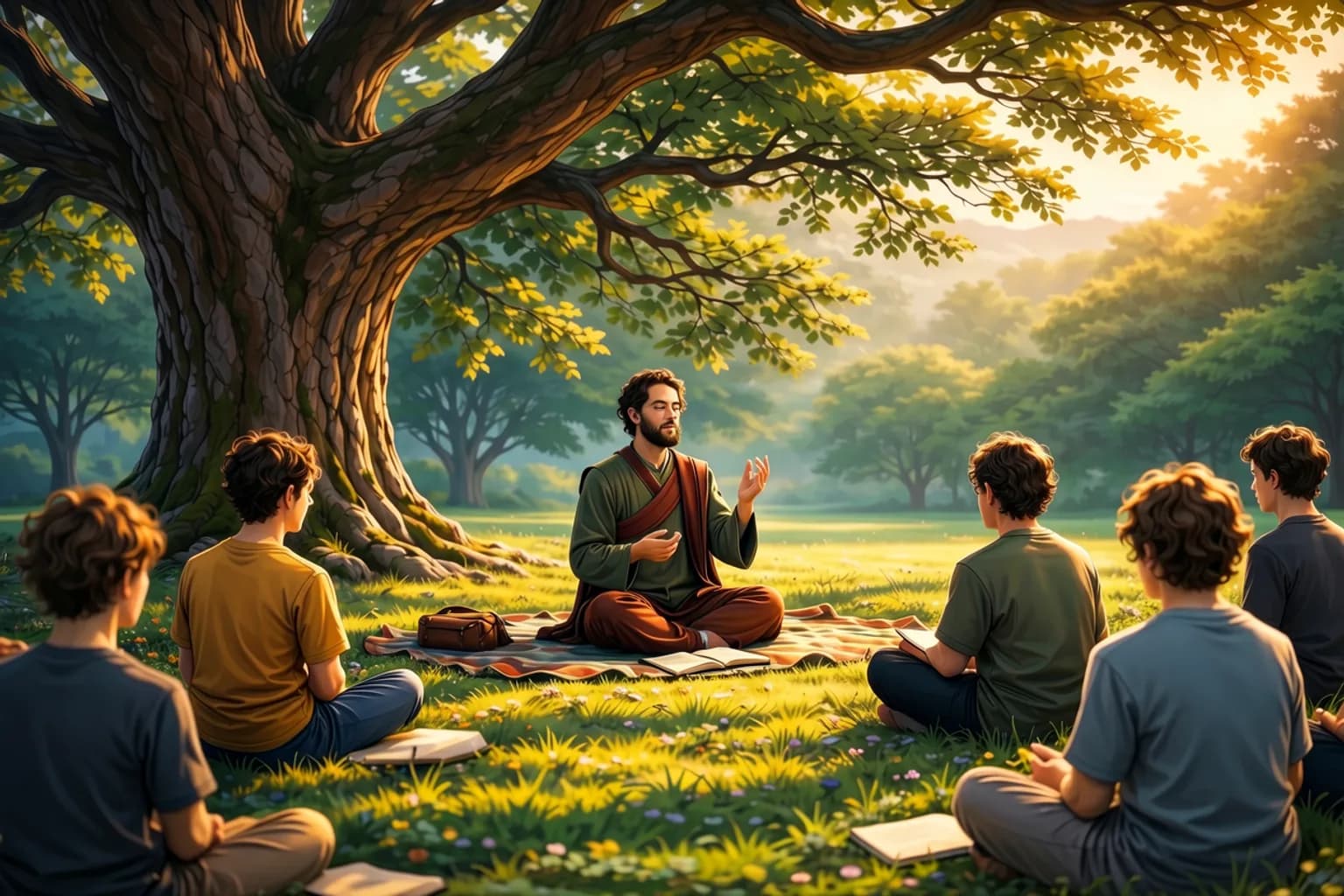
We live in the most skeptical era in human history. Doubt is treated as sophistication, belief as naivety. The educated reflex is to question everything, to demand proof, to treat faith as a relic of less enlightened times. There is genuine value in this skeptical spirit; it has cleared away a great deal of harmful superstition and false certainty. But something has also been lost, and a culture that has forgotten how to trust the unseen is poorer than it realises.
Faith is not the enemy of reason. It is what reason needs in the vast territory where proof cannot reach.
I studied physics at university, and for a few proud years I told my grandfather his prayers were superstition. He never argued. He only asked, one winter morning, whether I could prove that my mother loved me, or whether I simply trusted a lifetime of evidence that fell short of proof. I had no answer then. The question has kept me honest for thirty years.
What Faith Actually Is
The skeptic caricatures faith as believing things without evidence, even against evidence. But genuine faith is something subtler. It is trust extended into the realm where certainty is not available, which turns out to be most of the important realms of life.
You cannot prove that your life has meaning, that love is real, or that goodness matters. You live by faith in these things every day.
No one can prove that existence is meaningful, that love is more than chemistry, that justice is worth pursuing, that human beings have inherent worth. These are not conclusions of pure logic; they are trusts we live by. Even the most committed skeptic operates on a hundred unprovable faiths every day. The question is not whether to have faith, but in what.
What Pure Skepticism Cannot Give
Relentless skepticism is good at tearing down but poor at building. It can dismantle false beliefs, but it cannot, on its own, give a person something to live for. A worldview that admits only what can be proven ends up unable to justify the very things that make life worth living: meaning, hope, love, moral commitment. These all require trust in things that cannot be placed under a microscope.
This is why purely skeptical cultures tend toward a quiet despair. Having dismissed everything that cannot be proven, they are left with a world of facts and no reason to care about any of them. The skepticism that began as liberation ends as emptiness.
The Courage of Belief
It actually takes courage to believe in a skeptical age. It is easy to doubt; doubt risks nothing and commits to nothing. To trust in goodness, in meaning, in something greater than the material, knowing you cannot prove it and may be mocked for it, requires a kind of bravery that the cynic never has to summon.
This faith is not certainty. The person of genuine faith often carries doubt alongside their belief; the two are not enemies but companions. What distinguishes them is that they choose, in the face of uncertainty, to trust and commit rather than to withhold and dismiss.
Living by Trust
To recover faith in a skeptical age is not to abandon reason or embrace credulity. It is to recognise the limits of proof and to extend trust, wisely, into the territory beyond those limits, the territory where the most important things live.
- Trust that your life has meaning, and live as though it does.
- Trust that goodness matters, and act accordingly, even when it costs you.
- Trust that there is more to reality than what can be measured, and stay open to it.
The skeptic asks for proof before they will live. The person of faith lives, and finds that some truths only reveal themselves to those willing to trust them first. In an age that has forgotten this, remembering it is not naivety. It is wisdom the cynic has yet to reach.
The rest is for seekers
Keep reading free. Log in and every article on Reality Awake opens for you.